PMS and Feeling Low Understanding the Connection
PMS and Feeling Low Understanding the Connection


PMS and Feeling Low Understanding the Connection
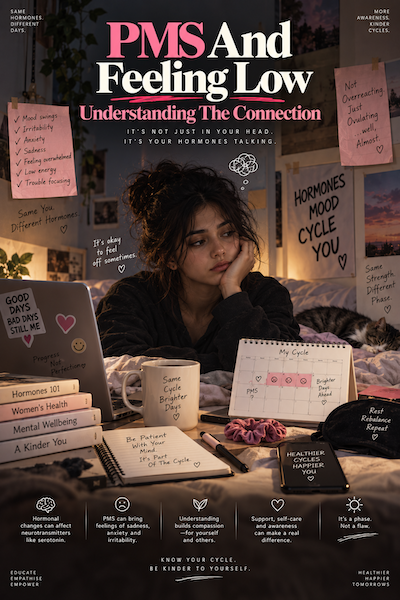
Many people who menstruate notice a shift in their mood in the days leading up to their period. Irritability sadness or a general sense of feeling low can show up seemingly out of nowhere. This is not imagined and it is not a lack of willpower. It has a real physiological basis rooted in hormonal changes.
What Is Happening In The Body
In the days before menstruation levels of estrogen and progesterone drop sharply after being elevated during the earlier part of the cycle. These hormones interact directly with brain chemicals including serotonin which plays a major role in regulating mood. When estrogen falls serotonin activity can drop along with it. This helps explain why so many people report sadness anxiety or a short temper right before their period even when nothing external has changed in their life.
Common Emotional Symptoms
The emotional symptoms of PMS vary widely from person to person. Some notice mild irritability that passes quickly. Others experience deeper waves of sadness low motivation trouble concentrating or a sense of being overwhelmed by things that would normally feel manageable. Sleep often becomes lighter or more disrupted during this window which can make emotional regulation even harder. For a smaller group of people these symptoms are severe enough to interfere with daily functioning and this pattern has its own clinical name premenstrual dysphoric disorder or PMDD.
Why It Can Feel So Confusing
One of the hardest parts of PMS related low mood is that it often does not feel connected to anything specific. A person might find themselves crying over something minor or feeling a heaviness they cannot explain. Because the cause is internal and hormonal rather than tied to an external event it can be easy to question the feeling itself or feel embarrassed by it. Understanding that this has a biological basis can reduce some of that self judgment.
Ways To Support Yourself
Tracking the cycle alongside mood can help build awareness of the pattern over time. Knowing that a low mood window tends to arrive a week before the period makes it feel less random and more expected. Gentle movement consistent sleep and reducing caffeine and alcohol during this window have been shown to ease symptoms for many people. Some people find that talking to someone close to them about the pattern helps because it removes the pressure to explain sudden shifts in mood in the moment.
When To Seek Support
If low mood during this time becomes severe consistently affects work relationships or daily functioning or brings on thoughts of hopelessness it is worth speaking with a doctor or gynecologist. Options ranging from lifestyle changes to specific treatments for PMDD exist and there is no need to manage this alone if it is significantly affecting quality of life.
Closing Thought
Feeling low before a period is common and it has a real biological explanation rather than being a personal failing. Recognizing the pattern naming it and building small supports around it can make those days feel more manageable rather than mysterious or shameful.
This is a sensitive topic for some readers. If you are personally struggling with your mental health I am happy to help you find the right support and resources.