The Cycle Nobody Signed Up For, Generational Trauma Explained
The Cycle Nobody Signed Up For, Generational Trauma Explained


The Cycle Nobody Signed Up For, Generational Trauma Explained
There is a very specific kind of confusion that hits when you realize the way you react to conflict, or love, or even rest, was never really yours to begin with. It was handed down, quietly, generation after generation, long before you had any say in it. That is generational trauma, and honestly most people are dealing with a version of it without even having the language for what it is.
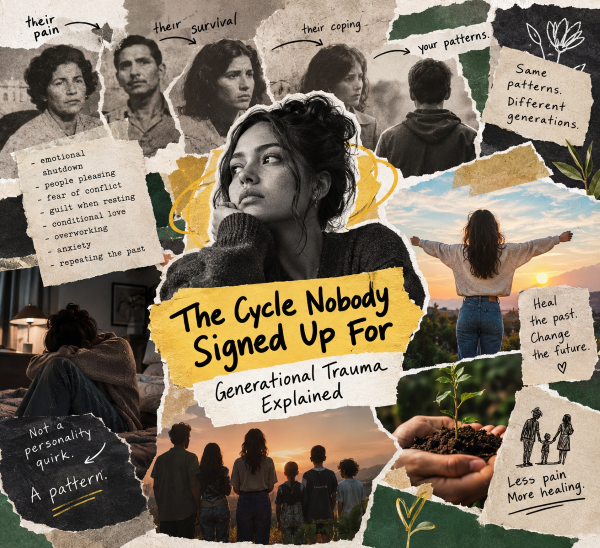
Generational trauma is basically emotional patterns, coping mechanisms and unresolved pain getting passed from parents to children, not through anything intentional, but through repetition. A parent who grew up in survival mode teaches survival mode, even if they never say a single word about it directly. A household where feelings were dismissed raises kids who learn to dismiss their own feelings too, simply because that is the only blueprint they were ever given. Nobody sits you down and teaches you this stuff on purpose, you just absorb it by watching what got rewarded, what got punished, and what got completely ignored growing up.
This shows up in ways that feel personal but are actually patterns way older than you. Struggling to express emotions because your household treated vulnerability as weakness. Feeling guilty for resting because productivity was the only thing that earned approval growing up. Associating love with conditions instead of consistency, because that is exactly what love looked like for the people who raised you. None of these are random personality quirks, they are usually inherited coping strategies that made sense for survival once, even if they do not make sense for your actual life now.
What makes this even trickier is that a lot of these patterns come from real pain, not neglect on purpose. Parents dealing with their own unresolved trauma, financial stress, cultural expectations or even generational poverty were often just doing whatever kept the household functioning at the time. Understanding that does not excuse harm, but it does explain why breaking a cycle is so much harder than simply deciding to. You are not just changing your own habits, you are consciously choosing to do something your entire family line never had the tools, safety or awareness to do.
This is also why the whole idea of being the one to "break the cycle" feels so heavy for a lot of people right now. It is not just a nice phrase for a caption. It genuinely means unlearning reactions your nervous system picked up before you could even form full sentences, while still respecting where your family came from and what they were actually up against. That balance between healing yourself and not villainizing everyone who came before you is honestly one of the hardest parts nobody warns you about.
The good part is awareness alone changes a lot. Once you can actually name a pattern instead of just living inside it on autopilot, you get a choice you never had before. You can notice yourself repeating an old reaction in real time and choose differently, even if it feels unfamiliar or uncomfortable at first. That discomfort is not a sign you are doing something wrong, it is usually just proof you are doing something your family line has never done before.
Breaking a cycle does not mean your childhood gets erased or your family's struggles get dismissed. It just means the next generation gets to inherit a little less pain than the one before them did. And honestly, that small shift, repeated enough times, is exactly how generations eventually stop passing down wounds and start passing down something healthier instead.