YOUR SQUAD'S DISCORD SERVER HAS MORE RULES THAN YOUR COLLEGE
YOUR SQUAD"S DISCORD SERVER HAS MORE RULES THAN YOUR COLLEGE


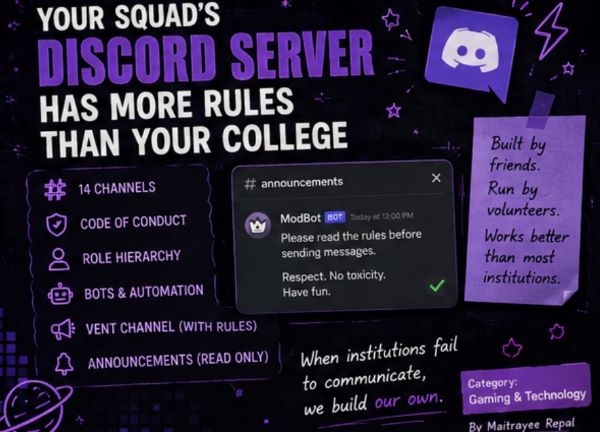
YOUR SQUAD'S DISCORD SERVER HAS MORE RULES THAN YOUR COLLEGEFourteen channels. A pinned code of conduct. A role hierarchy that took someone an entire Sunday to design. A bot that mutes you for sending memes in the wrong channel. This is not a corporate onboarding deck, this is six friends who met in a ranked match eight months ago and now run a tighter ship than most student councils, complete with an "announcements" channel nobody's allowed to post in and a "vent" channel with its own separate set of rules about what counts as venting versus what counts as starting drama.
Discord didn't just give Gen Z a place to talk about games. It gave a generation that grew up watching institutions fumble basic communication, colleges that never reply, offices that bury announcements in email chains nobody opens, group projects run entirely on one panicked WhatsApp message at 11pm the night before submission, a chance to build the org structure themselves, from scratch, with the one incentive that actually works: they wanted to be there. Nobody assigns unpaid moderator duty. People volunteer for it, happily, for a community built around a shared interest and absolutely no academic credit.
Look closer at what these servers actually contain and it stops looking like overkill and starts looking like competence nobody asked them to develop. Onboarding flows for new members. Verification bots to keep out randoms. Scheduled events with RSVP tracking for a Friday night session that six people are attending. Role-based permissions so the person managing the meme channel isn't also moderating serious discussions. Somewhere along the way, a group of people whose only shared qualification is "we like this game" accidentally built better systems than institutions with actual budgets and actual staff.
Part of this is generational muscle memory. This is a generation that has been let down, repeatedly, by systems that were supposed to communicate clearly and didn't, timetables that changed without notice, results portals that crashed on the one day everyone needed them, admin offices that answered the phone maybe once a week. When you've spent enough of your life chasing information that should have been handed to you, you develop a very specific, very stubborn instinct: if nobody's going to build the system properly, you will, even if it's "just" for a group chat about a video game.
The rules also aren't there because six friends distrust each other. They're there because ambiguity, in any group larger than three, eventually produces conflict, over who gets picked for the squad, over whether a joke crossed a line, over whether someone's "afk for five minutes" is actually five minutes or the beginning of them quietly checking out of the friendship. A pinned rule about respectful conduct isn't bureaucracy for its own sake. It's six people who've decided, collectively, that they'd rather write the awkward conversation down once than have it on a bad day, badly, in the heat of an argument nobody wanted to start.
There's also a quieter thing happening underneath the emoji reacts and the custom bot commands: for a lot of people, this server is the most stable community structure in their week. Classes get cancelled. Plans with "IRL" friends fall through because everyone's schedules are different now. But the server is always there, always online, running on rules everyone agreed to and roles everyone respects, which is more reliability than a lot of people get from spaces that are supposedly more "real."
Laugh at the fourteen channels if you want, the sheer amount of infrastructure built around a game nobody's parents have heard of is, admittedly, a little funny from the outside. But that server has better attendance, better rules enforcement, and a faster response time than most institutions twice its size and ten times its budget, run entirely by people who built it because they cared, not because anyone made them.