Dr. Anand Nadkarni: The Man Who Made Mental Health Feel Human


Dr. Anand Nadkarni: The Man Who Made Mental Health Feel Human
Some people leave behind awards.
Some leave behind institutions.
And then there are people like Dr. Anand Nadkarni — who leave behind comfort.
For so many Maharashtrian families, students, parents, overthinkers, anxious souls, recovering addicts, stressed employees, confused young adults and emotionally exhausted people… he became that calm voice saying:
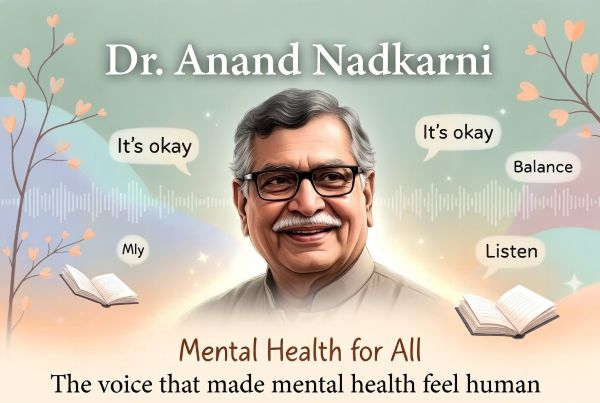
Long before mental health became an Instagram topic or therapy memes became relatable content, Dr. Nadkarni was already doing the real work — making people feel seen, heard and understood without judgement.
As someone who grew up hearing his talks, reading snippets of his thoughts, or listening to Manacha Podcast while feeling low at 2 AM… it honestly feels impossible to imagine a world without his voice.
But maybe that’s the thing about people like him.
They never really leave.
The Coolest Thing About Him? He Made Psychology Feel Simple.
Dr. Nadkarni had this rare superpower:
he could explain complicated emotions in the most normal, everyday language.
No intimidating medical jargon.
No “you’re broken” energy.
He spoke about stress, relationships, self-esteem, parenting, loneliness, addiction, overthinking and emotional burnout like a caring friend who genuinely understood people.
And somehow, after listening to him, life felt a little less scary.
At a time when many people were scared to even say the word “therapy,” he helped society understand that asking for help is not weakness — it’s emotional courage.
Mental Health for Everyone
In 1990, he founded the Institute of Psychological Health (IPH) in Thane with one beautiful mission:
Mental Health for All.
Not just for the rich.
Not just for “serious cases.”
Not just for English-speaking people.
For everyone.
Through IPH, Muktangan and countless community initiatives, he worked with schools, families, workplaces and recovering addicts to create emotionally healthier spaces.
He believed healing should happen in communities — not just clinics.
Honestly? That idea still feels ahead of its time.
He Didn’t Teach Perfection. He Taught Balance.
One of the best things about Dr. Nadkarni’s work was that he never pushed toxic positivity.
He didn’t say:
“Be perfect.”
“Always stay positive.”
“Never feel sad.”
Instead, he taught people to:
accept imperfections,
communicate better,
reflect honestly,
manage stress mindfully,
and build meaningful relationships.
Basically, he taught emotional survival skills before the internet turned them into “self-care content.”
A Therapist for an Entire Generation
Whether through books, public talks, theatre, films or Manacha Podcast, he made mental health conversations accessible in Marathi — which honestly mattered a lot.
Because emotions feel different when explained in your own language.
His podcast discussions on empathy, forgiveness, overthinking, self-talk and emotional wellbeing still feel incredibly relevant today — especially for a generation constantly dealing with burnout, pressure and comparison.
What Can We Learn From Him Now?
Maybe the best tribute we can give Dr. Anand Nadkarni is this:
checking on our friends properly,
talking openly about emotions,
not mocking therapy,
listening without instantly judging,
and treating mental health as something normal — like physical health.
Not every problem needs a motivational quote.
Sometimes people just need understanding.
And that’s exactly what he gave society for decades.
Thank You, Doctor.
Dr. Anand Nadkarni didn’t just build an institution.
He changed the emotional language of Maharashtra.
He made vulnerability feel less embarrassing.
He made healing feel possible.
And he made thousands of people feel less alone.
His voice may now belong to memories, podcasts and books — but his ideas will continue living in every honest conversation about mental health.
And honestly?
That’s a pretty legendary legacy.