Gen Z Just Took Over Indian Politics. We Rewrote Rules
Gen Z Just Took Over Indian Politics. We Rewrote Rules


Gen Z Just Took Over Indian Politics. Here’s How We Rewrote the Rules
Let’s be real: older generations once called us “apathetic,” “disengaged,” or just “too busy scrolling.” But guess what? While they were talking, we were voting, protesting, and taking over. Today, 50% of Gen Z (ages 18–25) wants to join politics, and 65.8% back PM Modi—not because we follow blindly, but because we see ourselves in the vision. We’re not just watching from the sidelines. We’re in the driver’s seat.
And we proved it. In the recent Bengal and Assam Assembly elections, Gen Z didn’t just show up—we showed power. Youth turnout hit record highs in Bengal, where young votersdumped dynastic politics and backed candidates who actually talked about climate change, jobs, and digital access. In Assam, we forced parties to stop playing identity politics and start talking about real development and regional issues. Our energy shifted the anti-incumbency tide. One generation, one election, one massive wake-up call for the political establishment.
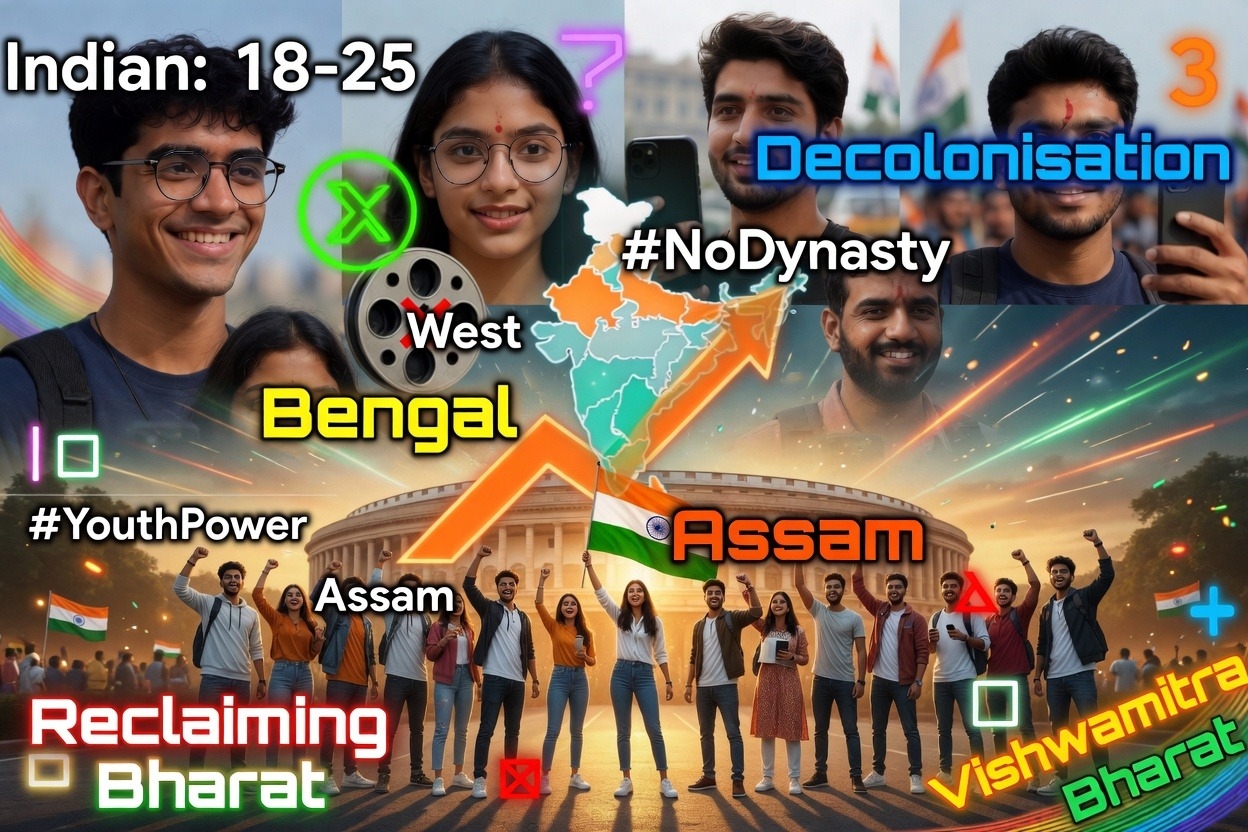
We didn’t wait for permission. We built our own stage. While elders rely on press conferences and editorials, we got our news from YouTube, Instagram, and Twitter, where politics lives in reels, memes, and threads. 71% of us discover news on social media, not newspapers. That’s not distraction—it’s our new democratic infrastructure.
We’re running for student councils, launching grassroots campaigns, and even starting our own political movements. Our 50% interest in politics isn’t a number; it’s a movement. We want clarity, accountability, and action—not just speeches.
What We Value (And What 55+ Doesn’t Get)
Here’s the truth: Gen Z and the 55+ crowd aren’t just different; we speak different political languages.
Leadership? We want leaders who are real, relatable, and do the work—not just hold titles. Elders tend to respect hierarchy and experience; we respect action and authenticity.
Policy? They care about national security and tradition. We care about mental health, climate justice, digital rights, and ethical governance.
Trust? We don’t trust institutions blindly—we trust our peers, our communities, and each other. Older voters lean on party loyalty and established leaders.
Communication? We speak in memes, hashtags, and short videos. They speak in press releases and speeches.
Ideology? We’re fluid. We vote for issues, not parties. They’re party-first, identity-first.
Accountability? We demand answers now, via social media. They’re okay with waiting for bureaucracy to move at its own pace.
We don’t just want development. We want ethical development. When leaders fall short, we mobilize—online and offline—and force conversations that traditional media couldn’t even start.
The Modi Factor
Why do 65.8% of us back PM Modi? It’s not blind loyalty. It’s alignment. His digital-first communication, focus on tech and innovation, and youth programs like Startup India and Skill India hit home. His self-made story and focus on national pride resonate with a generation trying to find identity in a globalized world.
But we’re not followers. We’re skeptics. When privacy concerns rise under the Digital Personal Data Protection Rules, we speak up. When social welfare gaps appear, we call them out. We support what works, but we’ll critique what doesn’t. That’s not rebellion—it’s engagement.
The Gap Between Us and Them
This isn’t a revolt. It’s a reorientation.
Older generations grew up in scarcity—of resources, of choices, of political diversity. They value order, seniority, and continuity. We grew up in abundance and chaos. We value flexibility, equity, and speed.
They see compromise as wisdom. We see it as surrender.
They stay silent in institutions. We shout through algorithms.
They measure progress by GDP. We measure it by mental health access, gender equality, and climate justice.
What’s Next?
With Gen Z set to drive $1.3 trillion in spending by 2030, our political voice isn’t just about votes—it’s about power. More of us will join parties, start campaigns, or even build new ones. Indian politics will become more interactive, more digital, and more responsive.
But this isn’t about replacing older voices. It’s about intergenerational dialogue—where experience meets energy, and tradition meets transformation.
We’re not just entering politics.
We’re reinventing it.
And India is watching.