When Sadness Hurts in the Body
When Sadness Hurts in the Body


When Sadness Hurts in the Body
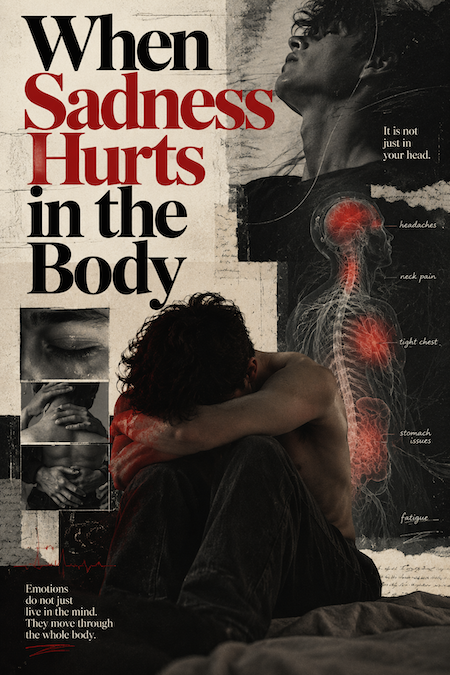
Most people know the feeling. A loss arrives or a relationship ends or a long stretch of stress finally catches up and the sadness stops being only a thought. It settles into the chest. It weighs down the shoulders. It turns the stomach. Sometimes it feels like a bruise that nobody else can see.
This is not imagination and it is not weakness. The mind and the body are not two separate systems. They are one system speaking in two languages.
The brain does not keep a strict wall
Researchers have found that emotional pain and physical pain share real neural territory. Brain imaging studies on social rejection show activity in regions such as the anterior cingulate cortex and the anterior insula. These same areas help process the distressing side of physical pain. Scientists still debate how specific this overlap is but the core finding that emotional pain recruits circuitry tied to pain has held up well.
Language already knew this. People say heartbroken or gutted or crushed. These words are not only metaphors. They describe sensations that are genuinely felt.
What happens in the body
Deep sadness and grief switch on the stress response. The body releases cortisol and adrenaline. Heart rate shifts. Breathing becomes shallow. Muscles tighten especially around the neck and jaw and chest. Digestion slows or becomes upset. When this state continues for hours or days the tension can turn into real aches and heavy fatigue. Some research also links intense or prolonged distress to increased inflammation which may add to the feeling of a body that is worn out and sore.
In rare cases a sudden emotional shock can affect the heart itself. A condition called stress cardiomyopathy or broken heart syndrome can follow a severe emotional blow and can look very much like a heart attack. Any sudden crushing chest pain should be checked by a doctor right away and never assumed to be only sadness.
Why it feels so heavy
Sadness often asks the body to slow down. Energy drops and movement feels costly and sleep gets disturbed. Appetite changes. Each of these changes makes the physical ache stronger. Then the ache itself becomes another reason to feel low. The loop is real and it is also breakable.
Small things that help
Nothing here erases grief and nothing here needs to. The aim is to give the body some relief while the heart does its slow work.
Breathe slowly with an exhale longer than the inhale. This signals the nervous system to settle. Warmth helps too whether it is a shower or a blanket or a hot drink. Gentle movement such as a short walk can loosen the tightness without demanding much. Eat something and drink water even when appetite is low. Rest without guilt.
Let the feeling have a name. Saying I am sad and it hurts is often more soothing than trying to push the feeling away. Crying is not a failure of control. It is one of the ways the body discharges strain. And tell someone. Pain that is shared tends to weigh less than pain that is carried alone.
When to reach for more support
If the physical pain of sadness lasts for weeks or disrupts sleep or eating or work or daily life it may point to depression or prolonged grief. Both are common and both respond well to help. A doctor or a counsellor or a psychologist can make a real difference. If thoughts of harming yourself ever appear please contact a crisis line or emergency services or someone you trust right away.
A closing thought
Sadness that hurts physically is not a sign that something is wrong with you. It is a sign that something mattered and that your whole being registered the loss. The ache deserves care and patience and company. With time it softens.