India Might Actually Ban Social Media for Under 18s, Here's the Real Debate
India Might Actually Ban Social Media for Under 18s, Here"s the Real Debate


India Might Actually Ban Social Media for Under 18s, Here's the Real Debate
While most of us were doomscrolling as usual, something genuinely big was happening in the background. The Supreme Court of India has been hearing a petition asking the government to restrict minors from opening social media accounts entirely, and just this week the Centre told the court it plans to amend IT rules to make age restrictions for platforms a legal requirement, not just a suggestion buried in the terms and conditions nobody reads.
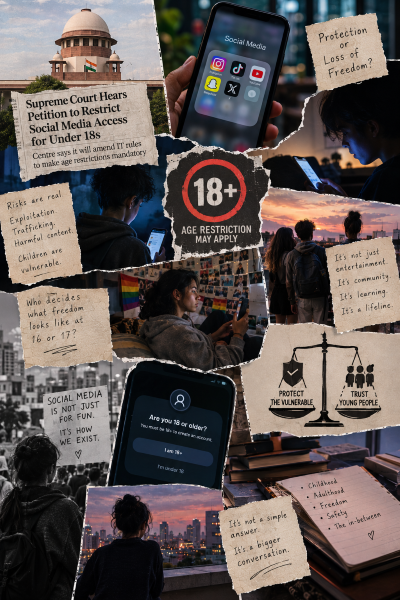
The petition itself came from an NGO called Just Rights for Children Alliance, and their argument is straightforward on paper. Right now, a thirteen year old can create a social media account by simply clicking accept on terms of service that, under Indian contract law, they are not even legally allowed to enter into as a minor. The petitioners argue that gap has left children exposed to real risks, including exploitation, trafficking and harmful content, while platforms technically operate inside a legal loophole nobody has properly closed. The court has already indicated that platforms need to require users to be at least eighteen, and the government now says it will make that enforceable rather than optional.
Supporters of this move are not wrong about the risks being real. Cases involving grooming, exploitation and harm to minors online do happen, and the argument that children's brains and judgment are still developing, making them more vulnerable to manipulation online, is backed by actual research, not just parental panic. For a lot of people, especially parents, this feels less like restriction and more like protection that should have existed years ago.
But here is where it gets genuinely complicated, and where a lot of young people, including plenty who are technically still minors, are pushing back hard. Critics argue that a blanket age ban ignores how deeply social media is now woven into how this generation learns, builds community, and even finds support they might not have offline. For queer teens, for kids in smaller towns without access to like minded peers nearby, for young creators already building an audience or a skill, social media is not just entertainment, it is often a genuine lifeline. Cutting that off completely, critics argue, does not remove the risks online, it just removes access to the good parts along with it, while determined teens likely find workarounds anyway.
There is also a bigger question buried underneath all of this. Who actually gets to decide what freedom of expression means for a sixteen or seventeen year old who arguably has enough judgment to navigate a platform responsibly, versus a genuinely vulnerable child. Some legal experts have already pointed out that broadly restricting access for an entire age group, including older teenagers close to adulthood, raises real questions about whether this protects children or simply strips an entire demographic of a voice they are constitutionally allowed to have.
This is not really a debate with an obvious villain either. Parents worried about their kids are not wrong to be scared. Teenagers who feel like their independence is being taken away without being consulted are not wrong to feel frustrated either. The real tension is between two things that both matter, protecting people who are genuinely vulnerable, and trusting an age group that increasingly builds their identity, community and even income online to have some say in how that access gets handled.
Whatever the final rules end up looking like, one thing is already clear. This is not just a policy footnote, it is a fight over who gets to define childhood, adulthood, and everything blurry in between, playing out in real time on the very platforms it is trying to regulate.