When Someone Becomes a Habit: The Pain of Going Back Alone
When Someone Becomes a Habit: The Pain of Going Back Alone


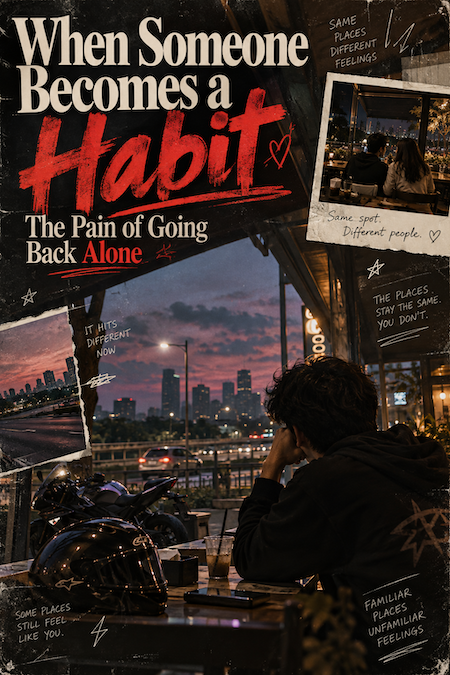
Some people never really leave. They just stop showing up while everything about them stays exactly where it was. That is the strange part about losing someone who had become a habit. It is not one big dramatic goodbye. It is a hundred small mornings where you reach for something that is no longer there.
Habit is a quiet word for something that runs deep. When a person becomes part of your daily rhythm you stop noticing them the way you noticed them in the beginning. You stop being amazed by their voice on the phone. You stop counting the minutes before they call. Instead they just become part of how your day is built. A good morning text. A specific way they say your name. The comfort of knowing someone is thinking about you even when you are doing something as ordinary as brushing your teeth. None of it feels remarkable while it is happening. It only becomes remarkable once it stops.
That is the cruel design of habit. You rarely realise how much space a person occupies until the space goes empty. The silence after them is louder than any fight you ever had. You keep unlocking your phone out of instinct expecting a message that used to come at this exact hour. You keep turning to tell them something funny before remembering there is no one on the other end anymore. The body keeps performing rituals the mind has already been told to stop.
People often say time heals everything and maybe it does eventually. But the early days after someone becomes a memory are brutal precisely because your nervous system has not caught up with reality. You built patterns around a person the same way you build patterns around brushing your hair or locking your front door. Removing a habit is not as simple as removing a name from your contact list. The body still walks toward where they used to be.
Going back alone is where the real ache lives. It is not the big absence that hurts the most. It is the small returns. Going back to the same coffee shop without someone across the table. Going back to your room without a voice note waiting. Going back to your own thoughts without narrating them to someone who used to listen. Alone is not a new feeling for most people. Everyone has been alone before this person entered their life. What makes this kind of alone different is that it now carries the shape of someone who is missing from it.
There is also a strange kind of grief in this that people rarely name properly. It is not death. It is not always even a breakup in the traditional sense. Sometimes it is simply distance. Sometimes it is a friendship that quietly faded. Sometimes it is a person choosing themselves over you and you understanding that choice while still hating it. Whatever the reason the outcome feels eerily similar. A person who mattered every single day suddenly matters in memory only.
What almost nobody warns you about is the specific loneliness of habits that outlive the relationship itself. You do not lose a person all at once. You lose them in pieces spread across weeks. The first week you stop hearing from them at their usual time. The next week your hand stops reaching for the phone quite so fast. A month later you notice you did not think about them for a few hours and that realisation somehow hurts almost as much as missing them did.
Healing from this kind of loss looks less like a straight line and more like slowly building new habits to replace the old ones. It means retraining your evenings to not expect a call. It means learning to sit with your own thoughts again without narrating them to someone else. It means rebuilding a version of alone that does not feel like punishment.
The pain of going back alone eventually softens not because the person stops mattering but because you slowly stop performing rituals built around their presence. New routines form. New silences start to feel normal instead of hollow. The ache does not disappear completely. It just stops being the loudest thing in the room.
Maybe that is the real definition of moving on. Not forgetting someone. Just learning how to walk back into your own life without expecting them to be standing there.