Trauma Made You, It Doesn't Get to Keep You
Trauma Made You, It Doesn"t Get to Keep You


Trauma Made You, It Doesn't Get to Keep You
Here is a sentence that sounds contradictory until you actually sit with it for a second. Trauma is not your fault, but healing from it is still your responsibility. Nobody chooses the things that hurt them growing up, but everyone eventually has to choose what they do with the aftermath, whether that feels fair or not.
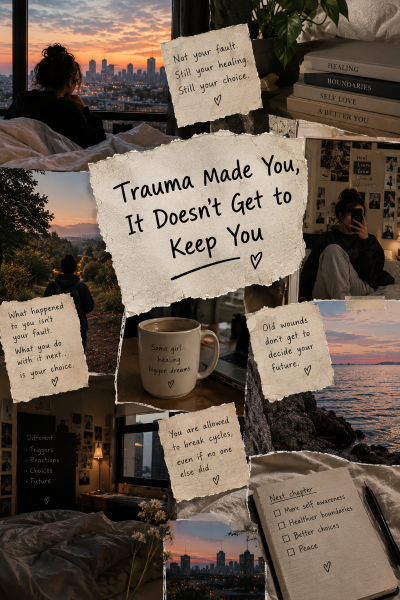
This distinction matters more than people realize. What happened to you, the neglect, the instability, the words that stuck longer than they should have, none of that was something you created or deserved. Blaming yourself for what someone else did or failed to do is not accountability, it is just misplaced guilt wearing a responsible costume. That part genuinely is not on you, and it never was.
But somewhere along the way, that same pain quietly turns into patterns. Struggling to trust people even when they have done nothing to earn suspicion. Shutting down during conflict instead of communicating. Pushing people away right when things start feeling too stable, because stability never felt safe before. These patterns were not your fault either, they were survival responses that made sense once. The tricky part is they do not just disappear on their own, and left unaddressed, they usually start hurting the people who had nothing to do with the original wound.
That is where responsibility quietly enters the picture. Not responsibility for what happened, but responsibility for what happens next. Once you are aware of a pattern, continuing to let it run your relationships, your reactions and your choices on autopilot slowly shifts from being something that happened to you into something you are now actively choosing to carry forward, even if unintentionally.
This is honestly one of the hardest realizations to sit with. It feels almost unfair, like life is asking you to clean up a mess someone else made. In a lot of ways, it is unfair. Healing was never going to feel like a level playing field. But waiting for the people who caused the pain to fix it, or waiting for the timeline to feel more fair before you start, usually just means staying stuck a little longer than necessary.
Taking responsibility does not mean pretending everything is fine or rushing forgiveness before you are ready for it. It means slowly learning to respond instead of just react. It means noticing when an old pattern is about to repeat itself and choosing differently, even when the old response feels more familiar and honestly easier in the moment. It means seeking support, whether that is therapy, honest conversations, or simply becoming more aware of your own triggers instead of letting them quietly run the show.
Here is something worth actually sitting with for a second. Are you currently letting an old wound make decisions for your present relationships without even realizing it. That question is not meant to guilt trip you, it is meant to hand you back a little bit of control you may not have realized you still had.
At the end of the day, you did not sign up for the pain that shaped you, but you do get to decide what it turns into next. Passing it forward unexamined, or slowly turning it into something wiser than what was given to you. That choice, unlike the original hurt, actually belongs to you.