Mommy Issues and Daddy Issues Explained, Minus the Internet Jokes
Mommy Issues and Daddy Issues Explained, Minus the Internet Jokes


Mommy Issues and Daddy Issues Explained, Minus the Internet Jokes
Every time someone says "you clearly have daddy issues" as a joke in a group chat, there is usually a tiny bit of truth buried under the meme, even if the way it gets used online has almost nothing to do with actual psychology anymore.
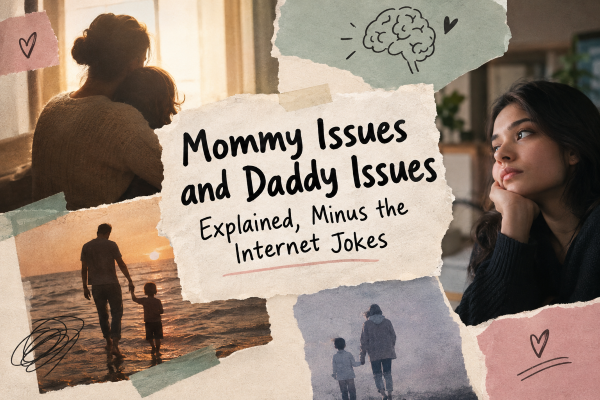
The real concept behind this comes from attachment theory, something psychologists have studied way before the internet turned it into a punchline. The basic idea is simple. The relationship you had with your primary caregivers growing up quietly becomes the blueprint for how you expect relationships to work later in life. If a parent was warm, consistent and emotionally available, you usually grow up expecting relationships to feel safe. If a parent was distant, inconsistent, overly critical or just not really present, your nervous system learns a completely different lesson about what love or attention is supposed to look like.
This is where "daddy issues" and "mommy issues" as casual terms actually come from, even if the internet stripped away all the nuance. Someone who grew up craving approval from an emotionally distant father figure might end up chasing validation from partners later, sometimes without even realizing that is what is happening. Someone who grew up around an overbearing or emotionally unavailable mother figure might struggle with emotional regulation or end up looking for a partner who feels more like a caretaker than an equal. None of this is really about blame, it is about patterns your brain quietly absorbed before you were even old enough to question them.
Here is the part that gets lost in the jokes though. These terms get thrown around like insults, especially at women when it comes to daddy issues and at men when it comes to mommy issues, which honestly says more about how casually people judge attachment wounds than it does about actual psychology. Real attachment styles are categorized differently, usually as secure, anxious, avoidant or disorganized, and they come from a mix of both parents, extended family, culture, personal temperament and experiences way beyond just one relationship growing up. Reducing someone's whole emotional wiring down to one parent and one catchy phrase is kind of lazy, even if it makes for a good caption.
That said, the pattern underneath is worth actually paying attention to instead of just laughing off. If you constantly need reassurance in relationships, or you find yourself drawn to people who feel emotionally unavailable in a familiar way, or you struggle to trust that someone will actually stay even when they show up consistently, that is not really a personality quirk, that is usually your early relationships quietly running the show in the background without you clocking it.
The good news is none of this is permanent. Attachment patterns are not a life sentence, they are just the starting point. Therapy, self awareness, and honestly just choosing partners who show up differently than what you are used to can slowly rewire what safety and love actually feel like for you. A lot of people spend years unknowingly repeating the same pattern simply because it feels familiar, mistaking familiar for safe, when those are not actually the same thing.
So next time the mommy issues or daddy issues joke comes up, it is fine to laugh, memes exist for a reason. Just know that underneath the punchline is a real psychological thread worth understanding, especially if you want your future relationships to run on something healthier than old, unspoken patterns you never actually chose in the first place.