Why So Many Clothing And Motogear Brands Skip India Or Cost A Fortune Here
Why So Many Clothing And Motogear Brands Skip India Or Cost A Fortune Here


Why So Many Clothing And Motogear Brands Skip India Or Cost A Fortune Here
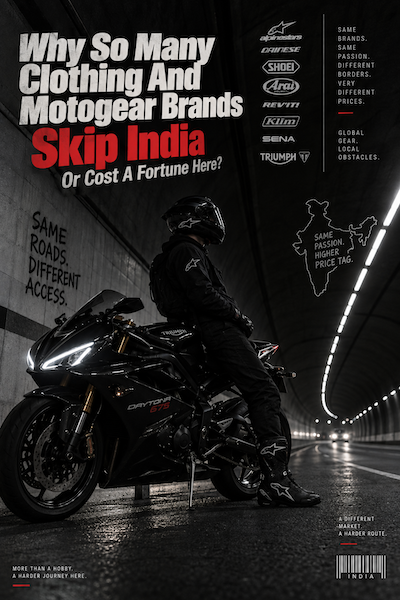
The Duty Stack Is The First Wall
Anyone trying to import branded apparel or riding gear into India runs into a layered tax structure. A Basic Customs Duty in the range of twenty to twenty five percent applies to most garments. On top of that sits a Social Welfare Surcharge calculated on the duty amount itself. Then IGST is applied on the combined value of goods plus duty plus surcharge. By the time all three layers are stacked the effective landed cost can run close to fifty or even sixty percent above the original price tag. A jacket that costs twelve thousand rupees on a European website can end up costing close to twenty thousand rupees once it clears Indian customs.
Small Market Size Makes Official Entry Risky
Motogear brands built in Europe and North America price their products for markets where safety certified riding gear is a legal or cultural expectation. India has a huge two wheeler population but a very small share of riders who buy premium certified gear. Setting up an official distribution network means warehousing local certification paperwork and marketing spend. For a brand that might sell a few hundred jackets a year in India that investment often does not pencil out. It is simpler and cheaper for these brands to let a handful of grey market importers and resellers quietly serve the niche audience while the brand itself stays absent.
Certification And Compliance Add Friction
Many riding gear items include armor inserts helmets or components that fall under Bureau of Indian Standards requirements. Getting those items certified for the Indian market is a separate cost and time investment on top of the tax burden. A brand has to decide whether the Indian market is big enough to justify running its products through BIS testing and local compliance checks. For most niche technical gear brands the answer has been no.
The Grey Market And Personal Import Trap
Because official channels are thin many buyers turn to friends traveling abroad reshipping services or grey market resellers. This route often looks cheaper on paper but it carries real risk. Customs can hold a parcel for assessment and charge duty on arrival regardless of how the seller described the shipment. Warranty claims become impossible since there is no authorized local distributor to honor them. If sizing is wrong there is no easy exchange process. What looks like a bargain on a foreign website often turns into a logistical headache once shipping insurance and possible customs delays are added to the bill.
Why Domestic Brands Cannot Fully Fill The Gap
India has strong domestic textile manufacturing and a growing crop of local riding gear brands. But building the kind of high end abrasion resistant fabric research crash testing and premium finishing that global names are known for takes years of investment. Local brands are closing the gap steadily but for now many riders feel the top tier of technical gear still sits outside their easy reach.
What This Means For Buyers
For now the realistic options are limited. Buy from the handful of authorized Indian stockists that do exist even if the price feels high compared to the foreign sticker price. Accept the total landed cost math before ordering internationally so there are no surprises at customs. Or wait for domestic brands to keep closing the quality gap. Until India's market size or policy landscape shifts the story stays the same. The gear exists. Reaching it without paying a steep premium does not.