Why You Keep Staying Up Late Even Though You Know Better
Why You Keep Staying Up Late Even Though You Know Better
|


Why You Keep Staying Up Late Even Though You Know Better
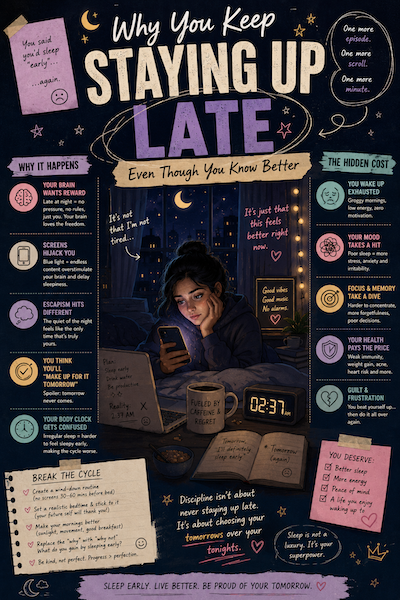
You had a long exhausting day. You are genuinely tired. Your body wants sleep. And yet at eleven at night instead of turning off the lights you find yourself watching one more episode scrolling one more feed or reading one more chapter. You know you will regret it tomorrow morning and you do it anyway. This pattern has a name that captures it perfectly. Revenge bedtime procrastination. It describes delaying sleep in order to reclaim a sense of personal time after a day that felt controlled by other people's demands.
The term originated in China where it described workers putting in extremely long hours who felt they had no personal time during the day so they stayed up late at night to get some semblance of freedom back even at the cost of sleep. It spread quickly because the feeling behind it is universal especially for students and young professionals whose days are packed from morning to night with classes assignments work and obligations that leave almost no room for anything that feels like it belongs to them alone.
Psychologically this behavior makes a strange kind of sense. During the day most of our choices are dictated by other people. Class schedules deadlines meetings family expectations. Night time especially the hours right before sleep becomes the one stretch of time that genuinely feels like it belongs to you. Sacrificing sleep to protect that time is not really about the show you are watching or the app you are scrolling. It is about reclaiming a sense of control and autonomy that felt missing all day.
There is also an emotional regulation piece happening here. For a lot of people the quiet hours before bed are the first real chance all day to process feelings that got pushed aside during a busy schedule. Scrolling or watching something can function as a form of decompression even if it is not a particularly healthy one. The problem is that this decompression comes at the direct cost of the very rest your brain and body need to actually recover from the day you just had.
The irony of revenge bedtime procrastination is that it usually backfires. Sleep deprivation makes the next day feel even more exhausting and even more controlled by outside demands because you are running on less energy and worse focus. This can create a cycle where each night's procrastination makes the next day harder which then increases the craving for personal time again the following night. Over time this pattern has been linked to increased stress worse mood regulation and reduced academic and work performance which only deepens the feeling that your days are not your own.
Breaking this cycle rarely works through sheer willpower alone because the underlying need being met is real. What tends to help more is finding small pockets of genuine personal time earlier in the day rather than only at night. Even fifteen minutes of doing something that feels chosen rather than obligated during the afternoon can reduce the pull to stay up late reclaiming that feeling later. Setting a consistent wind down routine and being honest with yourself about what you are actually seeking in those late hours whether it is rest connection or simple autonomy can help you find healthier ways to get that need met without sacrificing the sleep your body is quietly begging for.
-Devangshu Purohit