Why We Cant Stop Taking Personality Tests
Why We Cant Stop Taking Personality Tests
|


Why We Cant Stop Taking Personality Tests
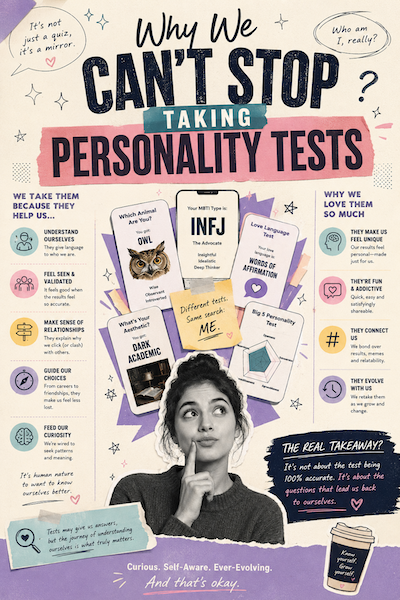
Scroll through any group chat and someone is bound to bring up their MBTI type their attachment style or which Hogwarts house they belong to. Personality quizzes have quietly become one of the biggest cultural obsessions among young people today. What used to be a fun thing to do in a magazine waiting room has turned into an entire identity language that shapes how we introduce ourselves date friends and even choose who to trust.
Part of the appeal is obvious. We live in a confusing chaotic world and identity can feel slippery. Career paths are not linear anymore relationships are complicated and social roles keep shifting. In the middle of all that uncertainty a personality test offers something incredibly comforting. A label. A box. A sentence that says this is who you are and here is why you feel the way you do. That kind of clarity even if it is a simplified version of the truth feels like relief.
There is also a social element to it. Saying I am an INFJ or I have an anxious attachment style is not just self description anymore. It is a shortcut for connection. It tells other people how to read you before they have spent enough time to actually know you. In a world where we meet hundreds of people online before we ever meet them in person these labels function like a kind of social shorthand. They speed up intimacy or at least the feeling of it.
But psychologists have raised real concerns about how far this trend has gone. Tools like MBTI were never designed with the scientific rigor that something like the Big Five personality model has. Yet MBTI remains far more popular because it is more fun more shareable and frankly more flattering. Nobody posts their Big Five results as a dating profile bio but plenty of people put their MBTI type right there next to their star sign.
The danger is when a label stops being descriptive and starts being limiting. If you believe you are an introvert because a test told you so you might stop putting yourself in situations that could actually help you grow more comfortable around people. If you believe your attachment style makes you incapable of trust you might use that as a reason to avoid the vulnerable work of actually building trust. Psychology becomes an excuse instead of a tool for understanding.
There is also something worth noticing about why attachment theory specifically has exploded online in the last few years. Terms like anxious avoidant and secure used to live inside therapy rooms and academic papers. Now they are everywhere from Instagram reels to dating app bios. This says something about how our generation processes relationships. We are trying to understand our patterns not just live through them blindly which is genuinely a good instinct. The problem is when a complex psychological framework gets flattened into a single identity tag used to explain away every fight or every ghosting text.
None of this means personality tests are useless. They can be a starting point for self reflection a way to open a conversation about how you handle stress or conflict or closeness. The key is treating them as a mirror rather than a cage. A test can describe a tendency you have shown in the past. It cannot predict who you have to be forever. The most psychologically healthy way to use these labels is loosely holding them with curiosity rather than gripping them as the final word on who you are.
-Maitrayee Repal