The Gullak Went Digital and Nobody Told Our Parents
The Gullak Went Digital and Nobody Told Our Parents
|


The Gullak Went Digital and Nobody Told Our Parents
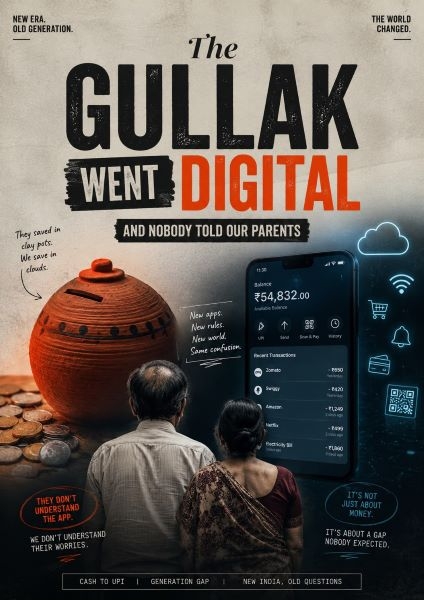
There’s a very specific kind of guilt that comes with being twenty-something in India right now: you can order a ₹450 iced latte without blinking but the idea of opening an RD at the bank feels like adulting homework you’ll “do next month.” Enter Jar — the app that took your grandmother’s steel gullak, gave it a UPI integration and a confetti animation, and somehow made saving money feel like a dopamine hit instead of a chore.
The Pitch: Save Without Noticing
Jar’s whole thesis is embarrassingly simple, so simple it almost feels like a hack. You link your UPI, and every time you spend, it rounds the transaction up to the nearest ₹10 and quietly
invests the difference into 24K digital gold. Pay ₹82 for chai and samosa, ₹8 disappears into your “gold locker.” You can also set daily, weekly or monthly auto-saves starting at ₹10 less than what you’d spend not tipping your Swiggy guy. The genius isn’t the gold. It's invisibility. Traditional saving asks you to make a decision every single time to transfer money, resist the urge to spend it, repeat. Jar removes the decision entirely. It’s less “investment app,” more “vibes-based behavioural nudge with a shiny gold sticker.”
Why Gold, Though?
Because gold isn’t actually the innovation here the culture is. Every Indian household has some relationship with gold, whether it’s the mangalsutra passed down or the Dhanteras purchase
that happens on autopilot every year. Jar didn’t invent India’s gold obsession, it just digitised it and made the entry price ₹10 instead of ₹10,000. It’s the same reason your Nani trusts a gold biscuit more than a mutual fund statement gold feels safe in a way NAV charts never will, even if the actual returns story is more complicated (digital gold pricing includes spreads and making-charge-like markups that eat into what “gold went up 8%” actually means for your locker).
The Part Nobody’s Instagram Story Mentions
Here’s where it gets less cute: Jar has been under regulatory scrutiny. Reports this year noted that Karnataka’s High Court allowed an FIR against the company to proceed after SEBI and RBI flags, with digital gold schemes like Jar’s being examined as potentially “unregulated deposits” under the BUDS Act. Jar isn’t banned and continues operating with millions of users, but it’s a real reminder that “digital gold” sits in a regulatory grey zone it isn’t SEBI-registered the way mutual funds are, and the underlying asset is a promise from a private gold vaulting partner, not a government-backed instrument. None of this means don’t use it. It means: this is spare-change money, not your emergency fund, and definitely not your only savings vehicle.
The Rest of the Squad
Jar didn’t stay lonely for long the micro-savings genre has its own ecosystem now:
• Gullak - basically Jar’s cousin from the same gharana, also gold-focused, with savings “triggers” tied to habits like food delivery orders.
• Siply - micro-savings pitched at first-time savers, leaning into accessibility over gold-specific branding.
• Kuvera - the more “serious” sibling in the group chat. No commissions, SEBI-registered, built for mutual fund investing rather than gamified gold rounding.
• OroPocket - positions itself as the upgrade path once you’ve outgrown spare-change gold and want to build actual structured wealth.
The pattern across all of them is the same behavioural bet: Indians don’t lack the ability to save, they lack the friction-free trigger to start. Make it automatic, make it tiny, make it feel like a game, and suddenly the girl who “can’t save for the life of her” has a gold locker worth ₹6,000 by December without remembering a single transaction.
So, Worth It or Not?
Worth it as a starter habit, not as a financial plan. Think of Jar and its cousins as training wheels they get you comfortable with the muscle of saving before you graduate to SIPs, index funds, or an actual financial advisor who isn’t a spinning wheel animation. The moment your gold locker starts feeling meaningful, that’s your cue to diversify out, not double down. Because gold is a hedge, not a growth engine and no app, however cute its onboarding screen, changes that math.
-Maitrayee Repal