Everything Gen Z Assumes About Therapy—Debunked
Everything Gen Z Assumes About Therapy—Debunked


Everything Gen Z Assumes About Therapy—Debunked
To be honest, Gen Z talks about therapy a lot. Mental health is literally everywhere now. It's on Instagram reels, podcasts and even memes. Half the time someone says they're "healing," the comments are full of "go to therapy" or "my therapist would've loved this." We've definitely normalized talking about mental health more than previous generations, and that's a W. But somewhere between all the awareness posts and relatable content, we've also picked up a bunch of misconceptions about what therapy actually is. Some people think therapy is only for people having a complete breakdown, while others imagine therapists just sit there handing out life advice like they're some life gurus with a magic reset button. Spoiler alert: that's not how it works.
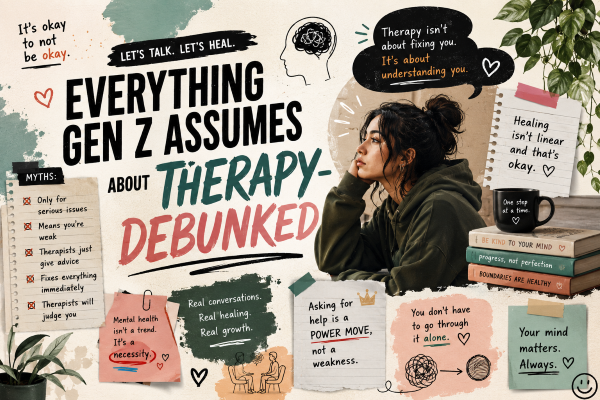
One of the biggest myths is that therapy is only for people with "serious" problems. Ever caught yourself thinking, "My problems aren't bad enough for therapy"? You're definitely not the only one. A lot of people feel guilty for even considering it because they think someone else has it worse. But therapy isn't reserved for rock-bottom moments. People go because they're stressed, burnt out, constantly overthinking, dealing with friendship drama, relationship issues, family scenes, academic pressure, low confidence, or simply because they want to understand themselves better. You don't wait until you're in the ICU to start taking care of your physical health, so why should mental health only matter during a crisis? Prevention > damage control. Simple.
Then there's the classic, "Going to therapy means you're weak." Are we seriously still stuck on this? We've all grown up hearing things like "be strong," "stop crying," or "itna bhi kya stress hai?" So asking for help somehow became embarrassing. But here's the thing....talking about your feelings is way harder than pretending you're fine. Therapy isn't some easy escape route. It takes guts to unpack emotions you've been avoiding for years. Sometimes you'll walk out feeling lighter, other times you'll walk out questioning your entire existence. Character development, basically. That's not weakness, that's putting in the work.
Another assumption is that therapists just tell you what to do. If that were true, our best friends would've been licensed therapists by now. Therapy isn't someone saying, "Here's your life plan, good luck." A therapist helps you understand why you react the way you do, where certain patterns come from, and how you can respond differently. They won't make your decisions for you or tell you who to date, what job to take or whether you should text your ex. (Please don't text your ex.) They're there to help you trust your own decisions a little more.
And can we talk about movies for a second? They make therapy look like one emotional conversation where someone cries, has an epiphany, hugs their therapist and suddenly life is sorted. I blame Netflix for setting unrealistic expectations. Real therapy doesn't work like that. Some sessions feel amazing. Some are awkward. Some make you stare at the ceiling at 2 a.m. replaying one sentence your therapist said. Healing isn't a montage. It's messy, slow and sometimes feels like you're unlocking new levels of emotional lore every week.
A lot of people also worry that therapists will judge them. Fair enough. Telling a complete stranger your weirdest thoughts sounds scary. But therapists are literally trained to listen without judging you. Their job isn't to roast your choices or make you feel guilty. It's to help you understand yourself in a safe space. And nine times out of ten, people leave thinking, "Wait... that's it? Why was I stressing so much?"
Gen Z has already done something really important—we've made mental health conversations way more normal. But therapy still gets misunderstood. It's not just for people at their lowest. It's not attention-seeking, it's not "being dramatic," and it definitely isn't a sign you've failed at life. Sometimes it's simply about understanding yourself better, learning healthier ways to cope, and realizing you don't have to carry everything by yourself.
And c'mon... protecting your mental peace is probably one of the best things you can do for yourself there is.