Why Every Notification Feels Like a Tiny Dopamine Hit
Why Every Notification Feels Like a Tiny Dopamine Hit


Why Every Notification Feels Like a Tiny Dopamine Hit
Your phone buzzes. You weren't even waiting for a message, but somehow your hand reaches for it before your brain even processes what happened. It could be your best friend sending a reel, your college group spamming memes, a random Instagram follow, or even Swiggy telling you there's 50% off on burgers you weren't planning to order. Doesn't matter. You check it anyway. That tiny excitement you feel for a second isn't random. It's your brain chasing dopamine, the chemical linked with motivation and reward. The funny part? The notification itself isn't the reward. It's the suspense before opening it. Your brain goes, "Ooo, what's this?" and suddenly you're unlocking your phone for the fifteenth time in an hour. Bro, our brains really fell for the oldest trick in the book.
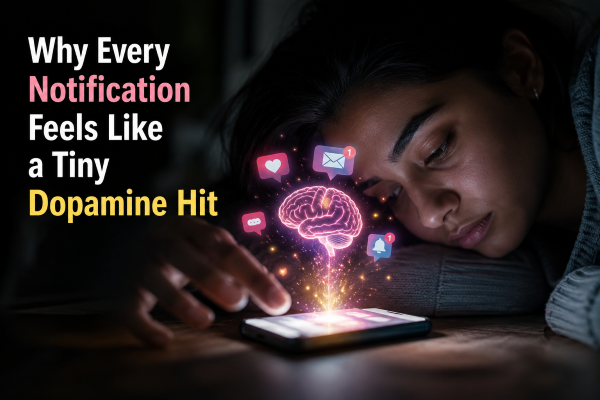
The reason notifications are so addictive is because they're unpredictable. If your phone buzzed every hour with the exact same message, you'd stop caring in two days. But social media doesn't work like that. One notification could be your crush liking your story after disappearing for a week. Another could be your package finally getting delivered. Another could be your friend dropping the most unhinged reel in the group chat. Since your brain never knows what's coming next, it keeps checking. That's the same reason people refresh Instagram, Snapchat, WhatsApp, or even their email every few minutes. Half the time there's nothing important, but your brain whispers, "Bas ek baar aur dekh." Suddenly you opened Instagram just to reply to one DM, and forty minutes later you're watching a raccoon wash grapes while someone in the comments is debating pineapple on pizza. And boom—you just got sucked into a full-on internet spiral.
Social media apps know exactly what they're doing. The red notification badges, vibrations, sounds, streaks, likes, reactions, typing indicators, and read receipts aren't there just to make life easier. They're designed to keep pulling your attention back. That's why phantom vibrations are a real thing too. Ever felt your phone vibrate in your pocket, grabbed it instantly, and... nothing? Your brain got so used to expecting notifications that it created one out of thin air. Wild. That's also why so many of us feel weirdly disappointed after checking our phones and seeing zero notifications. It's not because we're addicted to talking to people. It's because our brain was expecting a tiny reward and got hit with "No new notifications." Ouch.
The scary part isn't notifications. It's how invisible the habit becomes. Waiting in line? Phone. Watching Netflix during a boring scene? Phone. College lecture gets slow for thirty seconds? Phone. Hanging out with friends and someone leaves for the washroom? Phone. We don't even realise we're doing it anymore. The good news is your brain isn't permanently cooked. Turning off unnecessary notifications, keeping your phone away while studying, or simply letting yourself be bored for a few minutes can slowly break the cycle. Boredom isn't the enemy. It's actually where creativity, random thoughts, and real conversations show up. So the next time your phone lights up, ask yourself one thing. Did you pick up your phone because you wanted to, or because your brain heard a tiny "ding" and said, "Chal dekhte hain"? That answer says more about your relationship with your phone than your Screen Time report ever will.