Wait... Is Everything "Toxic" Now? The Rise of Therapy Language
Wait... Is Everything "Toxic" Now? The Rise of Therapy Language
|


Wait... Is Everything "Toxic" Now?
Be honest yaar, how many times did you call someone “toxic” this week? Or hit your group chat like “bro that exam literally traumatized me ”? Maybe you told your situationship they were gaslighting you after they left you on delivered for 12 hours. If you’re Gen Z, you’ve dropped at least one of these words without even thinking. Trauma, gaslighting, boundaries, narcissism — we’re throwing them around like chai at a family function.
And lowkey?
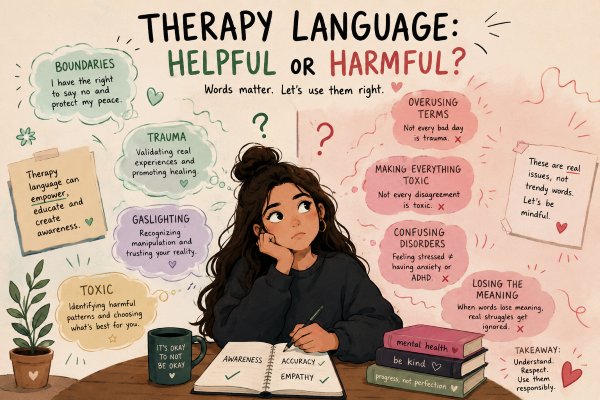
It’s not all bad vibes. A few years ago, talking about mental health was basically taboo, like admitting you still use Snapchat. Now we’re out here normalizing therapy, setting boundaries like pros, and spotting red flags faster than Insta stories. Learning about gaslighting helped so many of us escape that one friend who always twisted reality like a pro manipulator. Boundaries taught us it’s okay to say “nah, I’m protecting my peace” instead of people-pleasing till burnout. Therapy language gave us vocab for stuff we couldn’t even name before. Big W for awareness, fr.
But sometimes it feels like we went from “finally talking about this” to slapping clinical labels on every minor inconvenience. Your friend bails on plans last minute? “Toxic.” Crush takes 4 hours to reply? “Gaslighting me, blocked.” You bomb one presentation and suddenly you’re posting “healing my inner child after that trauma dump.” We’re joking… mostly. But are we actually using these words right, or did they just become Gen Z slang with better PR?
Real talk: the problem isn’t talking about psychology. More awareness = more people getting help. The issue is when deep concepts get TikTok-ified into 15-second memes. Actual trauma isn’t “my WiFi died during the exam.” Gaslighting isn’t just disagreeing with you — it’s that slow, sneaky pattern that makes you question your own sanity. And not every annoying person is toxic; sometimes they’re just having a bad day, yaar.
What’s wild is how casually we’re diagnosing ourselves now. “My OCD won’t let me leave the room messy” when your notes are color-coded. “I have anxiety about tomorrow’s test” after one all-nighter. “I’m so ADHD, I can’t even focus on this Reel.” Bro, distraction during a boring lecture isn’t ADHD — that’s just human. Feeling sad after a bad day isn’t depression. Wanting your desk clean isn’t OCD. These are real conditions that mess with people’s lives, jobs, relationships, everything. Reducing them to quirky personality traits is lowkey disrespectful, like calling a cold “cancer” because you coughed twice.
Don’t get me wrong though — the positives are massive. Our parents’ generation bottled everything up like old-school desi aunties. Now we’re out here in group chats saying “I need to vent, can I trauma dump real quick?” and actually going to therapy. That shift? Chef’s kiss. We’re breaking stigmas left and right.
The challenge is balance, besties. We can keep the awareness without turning every little thing into a mental health crisis. Use the words right. Learn the actual meanings instead of just vibing with the aesthetic. Next time you’re about to call someone toxic because they canceled plans, pause and ask — is this actual toxicity or just life being messy?
Not everything needs a fancy label. Sometimes a bad day is just a bad day. Sometimes your friend is just flaky, not a narcissist. And sometimes that “anxiety” is just pre-exam nerves that chai and a deep breath can fix.
Mental health awareness is important, but so is keeping the language accurate. Let’s not dilute the words that actually help people. Stay aware, stay real, and maybe touch some grass while you’re at it.