Why GenZ is obsessed with Spy Triller Dhurandhar
Why GenZ is obsessed with Dhurandhar


Why GenZ Loved Dhurandhar
One of the most talked-about topics since last December has been the spy thriller Bharatiya movie Dhurandhar. From Instagram reels to X threads, from packed single-screen theatres to late-night hostel debates — this movie literally became a cultural moment.
Dhurandhar has smashed old box office records ever since its release. The craze is unreal — dialogues turned into meme templates, songs became gym playlist staples, and the “Peak Detailing” moments triggered endless breakdown videos on YouTube. People across generations loved it, but the real driving force behind this phenomenon was India’s GenZ.
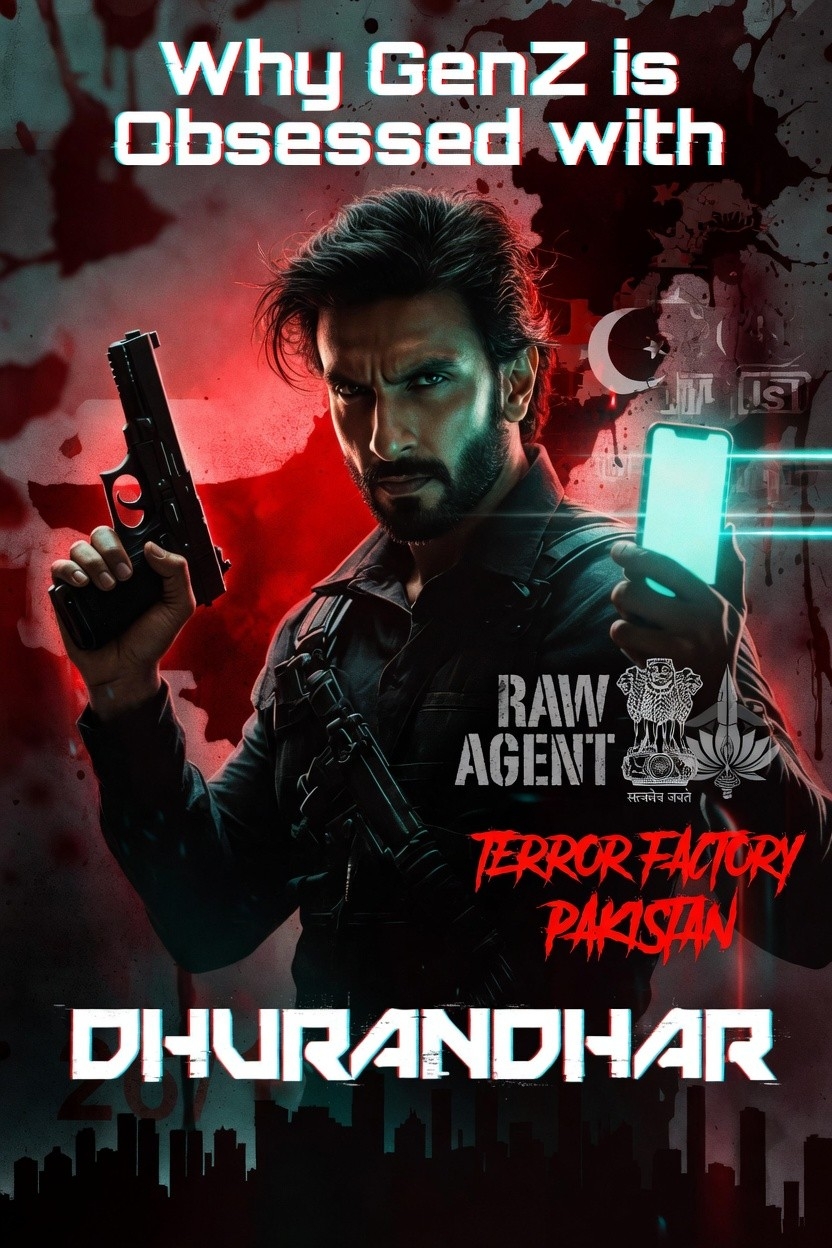
And honestly? Without GenZ’s obsession-level support, Dhurandhar probably wouldn’t have become the monster blockbuster it is today.
Here’s why GenZ connected with this film on a different level altogether:
1. The Raw, Brutal Action Felt REAL
Dhurandhar didn’t serve cartoon physics or gravity-defying circus stunts. No flying SUVs. No hero tanking 200 bullets without a scratch. No “Marvelized” nonsense.
The violence felt grounded, dirty and terrifyingly real. Every punch had weight. Every gunfight felt chaotic. The protagonist wasn’t shown as some immortal superhero with plot armor thicker than a tank.
That realism hit hard with GenZ audiences who are tired of over-the-top “heropanti cinema.” This movie respected intelligence instead of spoon-feeding fantasy.
2. The Music Was Pure Dopamine
Indian cinema runs on music, and Dhurandhar understood the assignment perfectly.
The soundtrack mixed retro 80s-90s vibes with modern rap, dark synth beats and military-style percussion. The result? Absolute cinema.
The BGM didn’t just “play in the background” — it carried tension, rage, patriotism and adrenaline through every scene. In theatres, audiences literally felt the bass in their bones.
Some songs became instant GenZ anthems overnight. Reels exploded. Edits exploded. Gym bros adopted the soundtrack like a religion.
3. Showing India Before 2014 Shocked GenZ
For many GenZ viewers, Dhurandhar became their first emotionally intense cinematic exposure to the era when terrorist attacks frequently shook India.
The film showcased how terrorism, fake currency rackets, mafia networks and narco-funding operated with terrifying efficiency. The depiction of Khalistani terror networks using drugs to hollow out youth added another disturbing layer.
But the moment that truly shook audiences?
That chilling sequence where the screen suddenly turns blood-red and the actual recordings between handlers and jihadis during the 26/11 attacks begin playing in the background.
The theatre silence during that scene was louder than any dialogue.
No dramatic music. No cinematic cushioning. Just raw horror.
GenZ respects creators who take risks — and Aditya Dhar showed the guts to include material most filmmakers would never dare touch.
4. The Movie Destroyed the “Low Attention Span” Stereotype
GenZ is constantly mocked for having the attention span of a goldfish because of short-form content and doomscrolling culture.
But Dhurandhar proved something important:
If the content is genuinely gripping, GenZ will stay locked in for HOURS.
Both parts of the film crossed the 3.5-hour mark, yet audiences remained fully invested. No boredom. No restless exits. No “when will this end?” energy.
The film conquered attention not through gimmicks, but through storytelling density, tension and layered detailing.
5. No Fake Hero Worship
This is probably one of the most underrated reasons behind the film’s success.
Hamza Ali Mazari isn’t portrayed as a messiah or a larger-than-life superhero. He is shown as what a spy truly is — a disposable instrument of state policy.
Cold. Replaceable. Useful.
The movie avoids the classic Bollywood formula where the protagonist is worshipped like a demi-god. Instead, it presents espionage as a brutal machine where individuals are merely pieces on a geopolitical chessboard.
GenZ appreciates morally grey characters more than flawless heroes — and Dhurandhar leaned heavily into that realism.
6. Espionage Finally Felt Serious Again
For years, spy thrillers in Indian cinema often drifted into accidental comedy — random dance sequences, over-romanticization, unrealistic gadgets and “enemy agents falling in love” clichés.
Dhurandhar stripped all of that away.
The life of a spy is shown as lonely, paranoid and psychologically exhausting. There are no glamorous shortcuts. No goofy charm. No bikini-clad distractions.
The profession feels dangerous in a painfully believable way.
The film basically told audiences: espionage is not fashion — it is sacrifice, manipulation and survival.
7. Pakistan Was Shown With “Peak Detailing”
One of the biggest reasons GenZ discussed Dhurandhar endlessly online was its hyper-detailed portrayal of Pakistan’s internal ecosystem — ISI networks, underworld syndicates, jihadi infrastructure, corruption, Baloch repression and the social consequences of cousin marriages.
The movie didn’t present a polished or sanitised geopolitical fantasy. It showed a darker, uncomfortable and deeply layered reality that sparked huge debates online.
That obsessive detailing became one of the film’s biggest flexes.
Fans even started calling Aditya Dhar the “CEO of Peak Detailing.”
A Film That Matched GenZ Energy
At its core, Dhurandhar succeeded because it understood the emotional pulse of India’s GenZ:
- They hate fake storytelling.
- They value realism.
- They love layered narratives.
- They respect bold creators.
- They want intensity, not cringe.
- And above all, they want cinema that feels emotionally and politically alive.
Dhurandhar didn’t just entertain GenZ — it made them feel seen.
That’s why the film became more than just a blockbuster. It became an experience, a flex, a fandom and for many young Indians — a statement.
Cheers to Dhurandhar. Absolute cinema. 🔥