Diet Coke and the Hype Around the Silver Can.
Diet Coke and the Hype Around the Silver Can.


Diet Coke and the Hype Around the Silver Can.
Few drinks carry as much attitude as a slim silver can of Diet Coke. It is cold and sharp and instantly recognisable and it has somehow become more than a soda. For millions of people it is a daily ritual and a style statement and a small act of rebellion all at once. Videos about it rack up views by the million and fans describe their perfect order with the seriousness of a coffee snob. This article traces how a low calorie cola from the early eighties became one of the most talked about drinks of the decade.
Diet Coke launched in 1982 as the first new brand from Coca Cola since the original drink itself. It was never meant to be a lighter copy of the classic. Food scientists say its distinct blend of sweeteners and its mouthfeel help explain the loyalty of its fans. Through the nineties the drink was closely tied to weight loss and a whole generation of Gen X drinkers grew up with it as a lifelong habit. Designers and celebrities such as Karl Lagerfeld made it a fixture of glamour and its sleek silver look barely changed which helped it feel timeless.
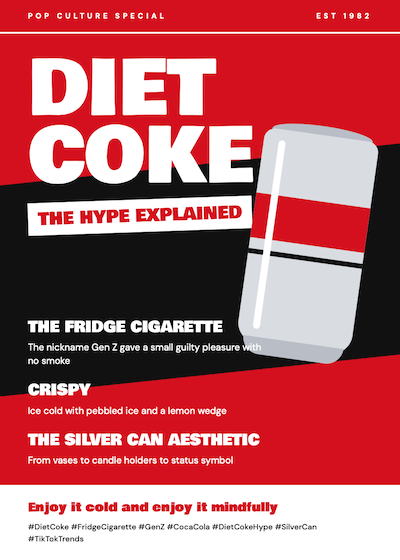
The current wave of hype started online. Diet Coke was rebranded as the fridge cigarette in a viral TikTok trend that caught the attention of Gen Z. The idea is simple. It is a small guilty pleasure that lets you step away from the day without any smoke. Fans also invented a word for the ideal serving which is crispy and means perfectly chilled with pebbled ice and a lemon wedge. Soon even older public figures were joining in and the drink shifted from a diet habit to a mood.
Aesthetics did the rest. The silver can needs no explanation and it photographs beautifully. Young fans turned empty cans into flower vases and candle holders and wall decor. Dua Lipa made headlines with a viral mix of Diet Coke with pickles and jalapenos. Coca Cola followed the buzz with new flavours including Ginger Lime and Feisty Cherry and Zesty Blood Orange and Twisted Mango. Packaging and personality became part of the product and every new flavour arrived with its own set of posts.
The craze has travelled well beyond the United States. A Fortune report in May 2026 said that Gen Z in India turned Diet Coke into a status symbol and that a can shortage then made it feel like a luxury. That fits a wider pattern in which a mass market product becomes a badge of taste simply because everyone online is talking about it. A cold can in hand now says something about who you are and what you scroll. Few brands can buy that kind of cultural attention.
Not everyone is cheering. Writers have warned that nostalgia for the drink should not bring back the harmful diet culture and eating disorder messaging of the nineties. Health debates around artificial sweeteners also continue and experts remain divided so moderation is the sensible approach. There is an irony too. Bloomberg reported that Gen Z often dislikes the word diet but loves drinks branded as zero sugar. So the generation making Diet Coke famous is also pushing the industry toward new labels.
So why does the hype endure. The answer is a mix of taste and ritual and design and community. It is affordable and familiar and easy to share in a photo. It also gives people a tiny break in a busy day which is a powerful promise for any product. Whether you love it or avoid it the silver can has proved that a simple drink can become a culture. Enjoy it cold and enjoy it mindfully and let the fizz be just a fizz.