Overstimulation Is Your Mind Asking For A Break
Overstimulation Is Your Mind Asking For A Break


Overstimulation Is Your Mind Asking For A Break
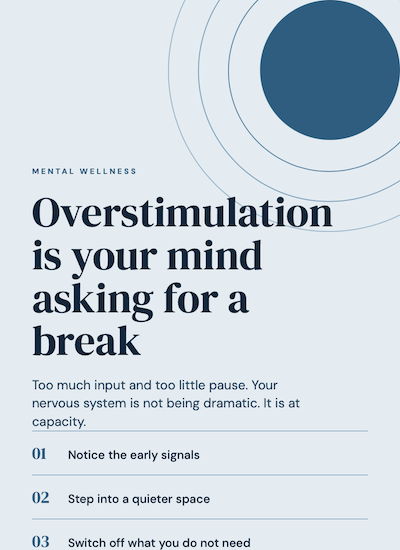
Some days everything feels like too much. The notification sounds feel louder and the conversations feel longer and even small decisions seem heavy. You are not being dramatic when this happens. You may simply be overstimulated. It is a very real state in which the brain receives more input than it can comfortably process and the body reacts by feeling tense and drained and irritable all at once.
Overstimulation happens when the senses and the mind take in more than they can sort. Noise and bright screens and crowded rooms and constant messages all compete for attention at the same time. The brain is built to filter what matters from what does not but that filter has limits. When it is overloaded it stops sorting well and every input feels urgent. This is why a person can feel fine in the morning and completely wrung out by evening without having done anything physically hard.
The signs are often mistaken for other things. People may feel snappy or restless or unable to concentrate. Some want to cry for no clear reason while others simply go quiet and withdraw. There can be a racing heart or a tight chest or a strong urge to escape the room. Because these reactions look like bad moods or poor patience people often blame themselves. They think they should be able to cope better. In truth the nervous system is signalling that it has reached its capacity and needs relief.
Some people are more prone to this than others. Those who are naturally sensitive to sound and light and emotion tend to notice overload sooner. People who are neurodivergent often experience it more intensely. Caregivers and students and professionals who spend long hours responding to other people are also at high risk because they rarely get a pause between demands. Modern life adds to the pile. Phones keep us reachable at every hour and social media feeds us a steady stream of opinions and images and worries that the mind was never designed to absorb so quickly.
The first step in handling overstimulation is to notice it early. Pay attention to the small signals such as irritation or a wandering mind or a sudden wish to be alone. These are gentle warnings before a full shutdown. When you catch them you can act sooner. Step outside for a few minutes or move to a quieter room. Lower the lights and put the phone away and take a few slow breaths. Even a short pause can calm the nervous system enough to bring clarity back.
Daily habits matter as well. Building quiet gaps into the day prevents stimulation from piling up. This could mean a walk without headphones or a meal without a screen or ten minutes of silence between tasks. Turning off unnecessary notifications removes a surprising amount of background strain. Sleep is equally important because a rested brain filters far better than a tired one. It also helps to set boundaries with people and plans. Saying no to one more event is not selfish. It is a way of protecting the energy you need for what truly matters.
Overstimulation is not a weakness and it is not something to be ashamed of. It is the mind telling you honestly that it has taken in enough. When you listen and respond with rest and gentleness you recover faster and you learn your own limits more clearly. A calmer day does not require doing more. Often it simply requires letting less in.