Feeding Strays Is Easy but Doing It Right Takes a Little Thought
Feeding Strays Is Easy but Doing It Right Takes a Little Thought


Feeding Strays Is Easy but Doing It Right Takes a Little Thought.
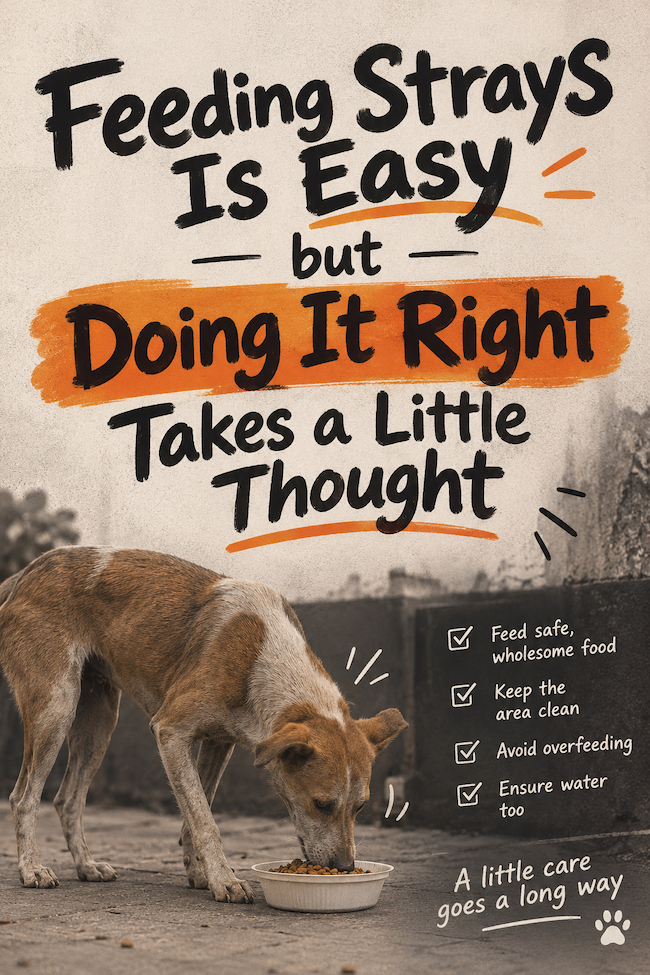
Every street has that one dog who waits outside the tea stall. Or that cat who shows up near the parking lot right when you get home. You see them every day and at some point you start wondering if they have eaten. I have been there and chances are you have too.
Feeding strays is one of the kindest little things a person can do. But kind and helpful are not always the same thing. A bit of thought makes your effort count for much more.
Start with the food itself. Many of us hand over whatever is lying around in the kitchen. Leftover curry or a spicy biscuit packet or a piece of chocolate. Please skip all of that. Chocolate and onions and garlic can seriously harm dogs and cats. Grapes and raisins are a problem too. Salty and oily food upsets their stomachs. Plain boiled rice with boiled chicken or egg works really well for dogs. For cats boiled fish or chicken without salt or spice is a good pick. Dry kibble is great because it stays fresh longer and is easy to carry around.
Water matters just as much as food. In Indian summers especially a steel bowl of clean water outside your gate can be a lifesaver. Refill it every day and keep it in some shade. Plenty of strays suffer more from thirst than hunger and hardly anyone thinks about that.
Timing and place are worth a thought as well. Try feeding at the same time every day so the animals know when to expect you. Pick a spot away from heavy traffic and away from doorways where neighbours might get annoyed. Clean up after yourself. Pick up leftover food and wash the bowl. A tidy feeding spot keeps flies and rats away and keeps the peace with people who are not so fond of animals. Honestly this is the biggest reason feeders land in trouble. A little courtesy goes a long way.
Be gentle in your approach. Strays can be scared or wary. Do not rush at them or try to pet them right away. Put the food down and step back. Let them come in their own time. Trust builds slowly and one calm week matters more than one excited hour.
Think about health too. Feeding is a great first step but a stray with a wound or a limp needs more than a meal. Look out for skin problems or ticks or a swollen belly. Local animal welfare groups and NGOs often run vaccination and sterilisation drives. Many cities also have helplines for injured animals. Saving a number in your phone costs nothing and might save a life one day.
Sterilisation deserves a special mention. One unneutered stray can lead to dozens of puppies or kittens within a year and many of them will not survive the streets. Helping get your regular visitors neutered and vaccinated is the most loving thing you can do beyond a bowl of food.
Also know the rules in your area. Indian authorities have generally supported feeding community animals as long as it is done responsibly and without causing nuisance to residents. Rules can differ from one housing society or city to another so a quick check keeps you on the right side.
Finally make it a group effort. Talk to your neighbours or your housing society. Share the task so no single person gets burnt out. When more people care the animals do better and there are fewer arguments too.
You do not need to rescue every animal on the street. Showing up with a bowl of food and some water regularly is already something beautiful. Small habits add up. So the next time that furry face looks at you with hopeful eyes you know exactly what to do.