Does Childhood Really Follow Us Into Adulthood?
Does Childhood Really Follow Us Into Adulthood?


Does Childhood Really Follow Us Into Adulthood?
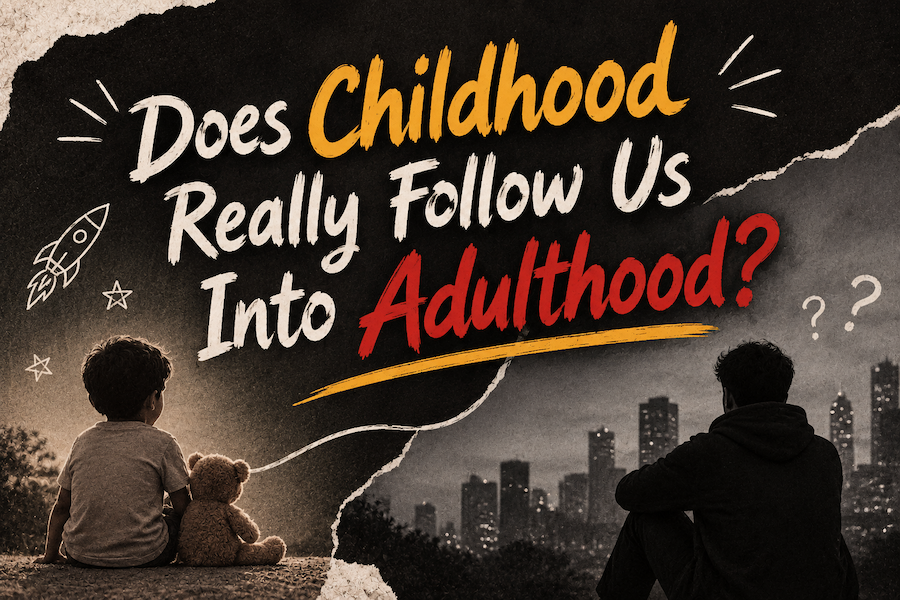
Most of us like to believe that childhood is something we leave behind when we grow up Yet many people notice that old patterns keep showing up in their adult lives A sharp remark from a boss can sting far more than it should A partner who goes quiet can trigger a wave of panic that seems out of proportion to the moment Psychology suggests these reactions are not random They are echoes of lessons we learned very early about safety and love and worth and they continue to guide us long after we have forgotten where they came from
One of the most influential ideas on this topic comes from John Bowlby who argued that the first bond between a child and a caregiver forms a lasting template for relationships Mary Ainsworth later studied how infants react when a caregiver leaves and returns and her work led to the attachment styles that psychologists still use today A child whose needs were met with warmth usually grows up expecting others to be reliable A child whose needs were ignored or met unpredictably may learn to stay guarded or to hold on tightly These expectations are often called internal working models and they quietly shape how we read the people around us
Childhood also teaches us what feels normal A child raised in a home where feelings were brushed aside may become an adult who hides emotions even from themselves Someone who was praised only for good marks may feel worthless on days when they are not productive Research on adverse childhood experiences has linked early stress and neglect with later struggles in health and relationships and emotional regulation Family patterns such as how conflict is handled or whether affection is shown openly get absorbed without anyone saying a word and we carry them into friendships and workplaces and marriages
The reason these patterns last is that they run like habits on autopilot The familiar feels safe to the nervous system even when it is not good for us so we often drift back toward what we already know It is also important to say that the link between past and present is a pattern and not a sentence The brain stays flexible across life and many people who had painful beginnings build secure and loving lives Studies on attachment suggest that a steady partner or a caring mentor or a good therapist can slowly shift how a person expects to be treated
So does childhood really follow us into adulthood The honest answer is yes but it does not decide our future for us Seeing the pattern is the first step because a reaction we can name is a reaction we can question Writing down triggers and talking with trusted people and seeking professional help when old pain feels heavy can all loosen the grip of the past Growing up does not mean erasing where we came from It means understanding it well enough to choose how much of it we carry forward and how much we finally put down