Why Do We Find It Hard to Make New Friends After College?
Why Do We Find It Hard to Make New Friends After College?


Why Do We Find It Hard to Make New Friends After College?
College makes friendship feel effortless. You live near people. You see them daily. You share classes and meals and late night talks without planning any of it. Then graduation arrives and everyone scatters. Suddenly making a new friend feels like a project that needs time and courage. Many adults quietly struggle with this and wonder what changed. The truth is that the conditions that create friendship change dramatically after college.
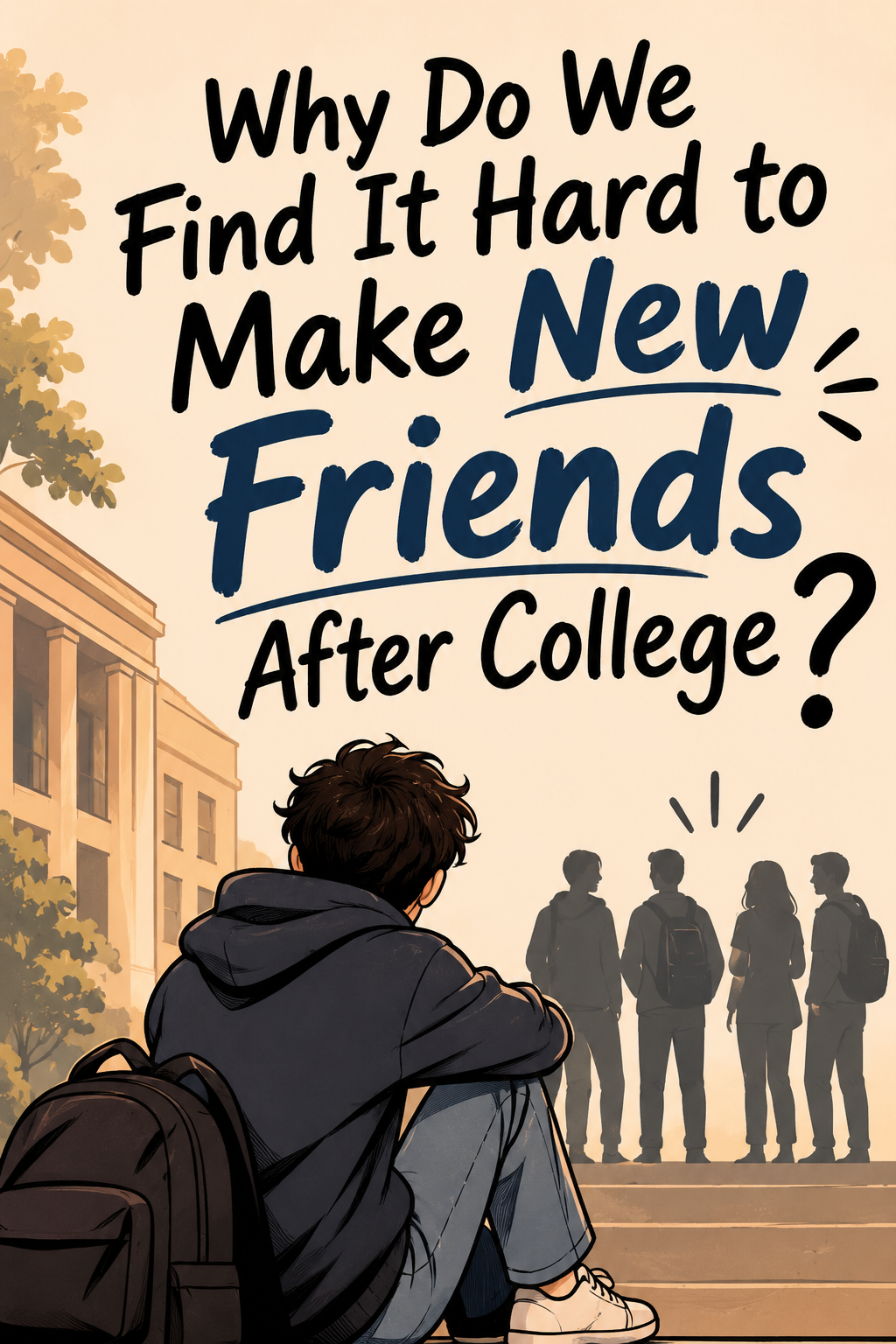
Researchers who study friendship point to three key ingredients. These are proximity and repeated contact and a setting that encourages people to open up. College offers all three by default. Adult life rarely does. Workplaces bring proximity but conversations often stay professional. Cities are large and people live far from each other. Friendships need many hours of shared time to deepen and adults simply have fewer free hours.
Time is a major barrier. Jobs and commutes and family duties fill the day. After a long shift many people want rest rather than socialising. Plans get postponed. Messages get left on read. A friendship that is not nurtured slowly fades even when both people care. In college the effort was built into the schedule. Now it must be created on purpose.
Life stages also drift apart. Some friends get married or move to another city or start different careers. Schedules and priorities stop matching. Old friends remain dear but they are not always available. This leaves a gap that new friends could fill and yet building them takes work.
Fear plays a quiet part. Reaching out as an adult can feel awkward or even embarrassing. People worry about seeming needy or being rejected. Many assume everyone else already has a full social circle. In reality most adults feel the same way and are waiting for another person to make the first move. This shared hesitation keeps many potential friendships from beginning.
There is also the matter of vulnerability. Adults tend to be more guarded. Past hurts and busy lives make us careful. Deep friendship needs honesty and trust and these grow slowly. Without the intense shared experiences of college years such as exams and hostel life and festivals it takes longer to feel close.
Technology adds a twist. Social media lets us keep up with many people but it can create shallow contact. Watching a post is not the same as having a conversation. Apps can help us meet people yet they cannot replace real time together.
So how can adults build friendships? Begin by joining regular activities such as a sports group or a book club or a hobby class or a volunteering team. Repetition matters more than intensity. Seeing the same faces every week builds familiarity naturally. Be the one who invites. A simple message suggesting coffee can open the door. Stay consistent and patient because friendships often take months to form. Also keep old bonds alive with small gestures like voice notes and short calls.
Most importantly lower the pressure. Not every new acquaintance needs to become a best friend. Warm connections build gradually. With intention and a little courage adulthood can bring friendships that are just as meaningful as those from college and perhaps even more chosen.