Why Do We Find Comfort in Familiar Pain?
Why Do We Find Comfort in Familiar Pain?


Why Do We Find Comfort in Familiar Pain?
Many people stay in situations that hurt them. They return to relationships that drain them or jobs that crush their spirit or thought patterns that bring constant worry. From the outside this looks confusing. Why would anyone choose pain over relief? The answer lies in how the mind treats the familiar. Pain that is known can feel safer than happiness that is unknown.
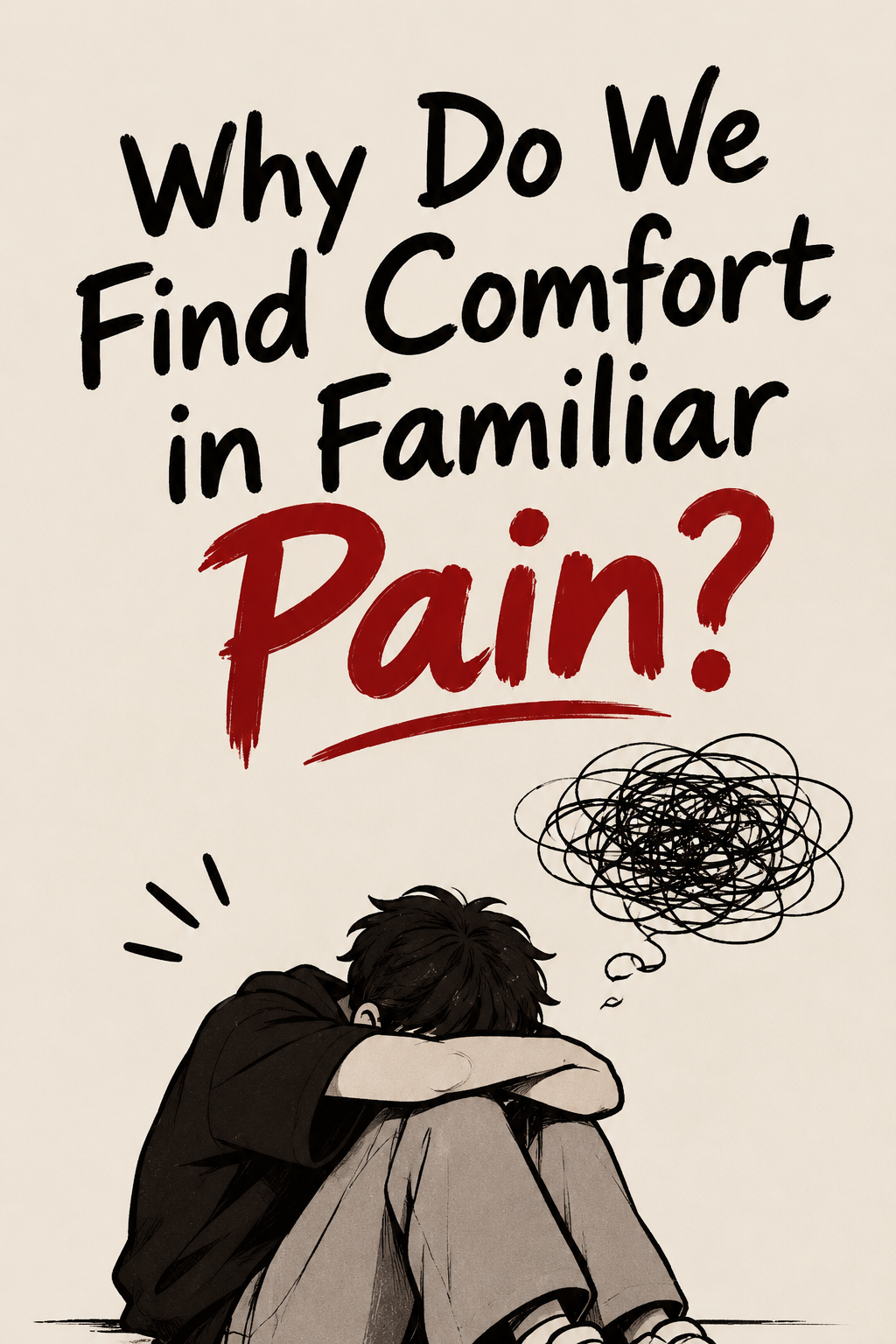
The human brain is built to predict. It constantly scans for patterns so it can prepare for what comes next. Familiar experiences even painful ones are easy to predict. We know how an argument will go. We know how we will feel afterward. This predictability gives a strange sense of control. New situations carry uncertainty and uncertainty triggers the stress response. For the nervous system a known hurt can feel less threatening than an unknown change.
Early life shapes this pattern deeply. Children learn what love and safety look like from the people around them. If affection came with criticism or inconsistency the child may grow into an adult who links closeness with struggle. Psychologists often speak of attachment styles to describe this. A person who learned to chase approval may feel strangely bored by a calm and steady partner. The calm feels unfamiliar and so it feels wrong. The old chaos feels like home.
Another idea is repetition. Some thinkers suggest that people unconsciously recreate old emotional situations in the hope of finally resolving them. A person who felt ignored in childhood may keep choosing distant partners in the hope of finally being seen. The pain repeats because the mind is still trying to fix the original wound. Sadly the repetition usually deepens the hurt rather than healing it.
Identity also plays a role. Over time pain can become part of who we are. A person may see themselves as the strong one who endures everything or the one who always gets left behind. Letting go of the pain can feel like losing a piece of the self. Even when life improves the mind may resist because the new story does not yet feel true.
Fear of the unknown matters as well. Change requires effort and risk. It asks us to face grief and to rebuild habits and to trust again. Staying in familiar pain asks for nothing new. It is tiring but it is a tiredness we understand. The mind often prefers a hardship it knows over a freedom it has never tested.
Healing begins with awareness. Notice the patterns that keep returning. Ask honestly what the familiar pain protects you from. Often the answer is fear of abandonment or failure or the unknown. Therapy can be a powerful space to explore this because a trained professional can help trace patterns back to their roots. Small experiments also help. Try one healthy change at a time and let the nervous system learn that calm is safe.
Self compassion is essential. Staying in familiar pain does not mean weakness. It means the mind was trying to protect you using the only map it had. With patience and support a new map can be drawn. Comfort can slowly be found in peace rather than in pain and unfamiliar kindness can eventually become familiar too.