Why More Women Are Reaching for Creatine
Why More Women Are Reaching for Creatine


Why More Women Are Reaching for Creatine
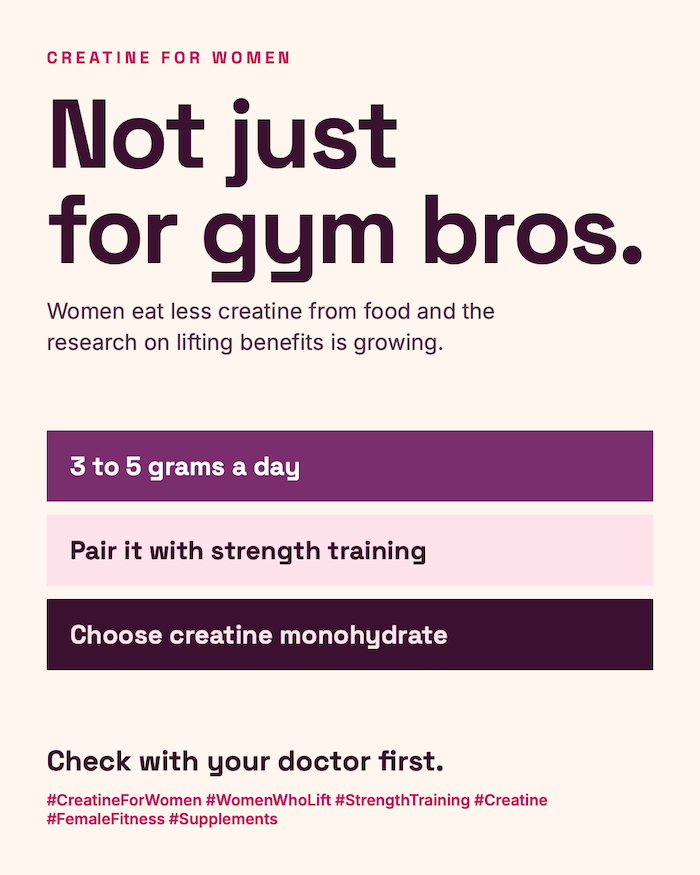
For years creatine had a gym bro reputation. Tubs of powder and loud protein shakes and not much else came to mind. Lately that picture has flipped. Women are talking about creatine on social media and in gym changing rooms and in doctor appointments and the supplement is finally getting a more honest look.
One reason is simple biology. Research suggests women eat roughly 30 to 40 percent less creatine from food than men because the main sources are meat and fish. Studies also point to differences in how women produce and store it. So a supplement can fill a gap that diet leaves open. For most women who choose it the standard research backed dose is 3 to 5 grams of creatine monohydrate a day taken consistently. Monohydrate is also the best studied form and usually the cheapest.
The strongest benefit is strength. When creatine is paired with resistance training it can help muscles train harder and recover better. A 2026 review of seven trials in postmenopausal women found small gains in lean mass and leg strength when creatine was combined with lifting. Small is the key word here. Creatine is not magic and it does nothing great without training. It also does not burn fat. If the body changes that is mostly the training doing its job.
There is buzz about the brain too. Early studies suggest creatine may help with mental fatigue and mood and memory. Researchers are careful though. Evidence in women is limited and mixed and a European food safety body rejected a general cognitive claim in 2024. So treat it as an interesting maybe and not a promise. Bone health is similar. One early trial hinted at slower bone loss but larger and longer trials did not find an effect on bone density.
Then comes the worry that creatine makes you gain weight. Some people notice a bit of water retention when they start and it is usually temporary. It has not been shown to cause fat gain. Skipping a loading phase and not obsessing over the scale helps. Most creatine research began in young men so female specific data is still catching up.
A few sensible points before starting. Pick plain creatine monohydrate and be consistent. Pair it with strength training. Women who are pregnant or have kidney problems or take regular medication should check with a doctor first. Creatine is popular for a reason but it is a tool and not a shortcut.
Maitrayee Repal