

Why Gen Z Is Slowing Down On Purpose
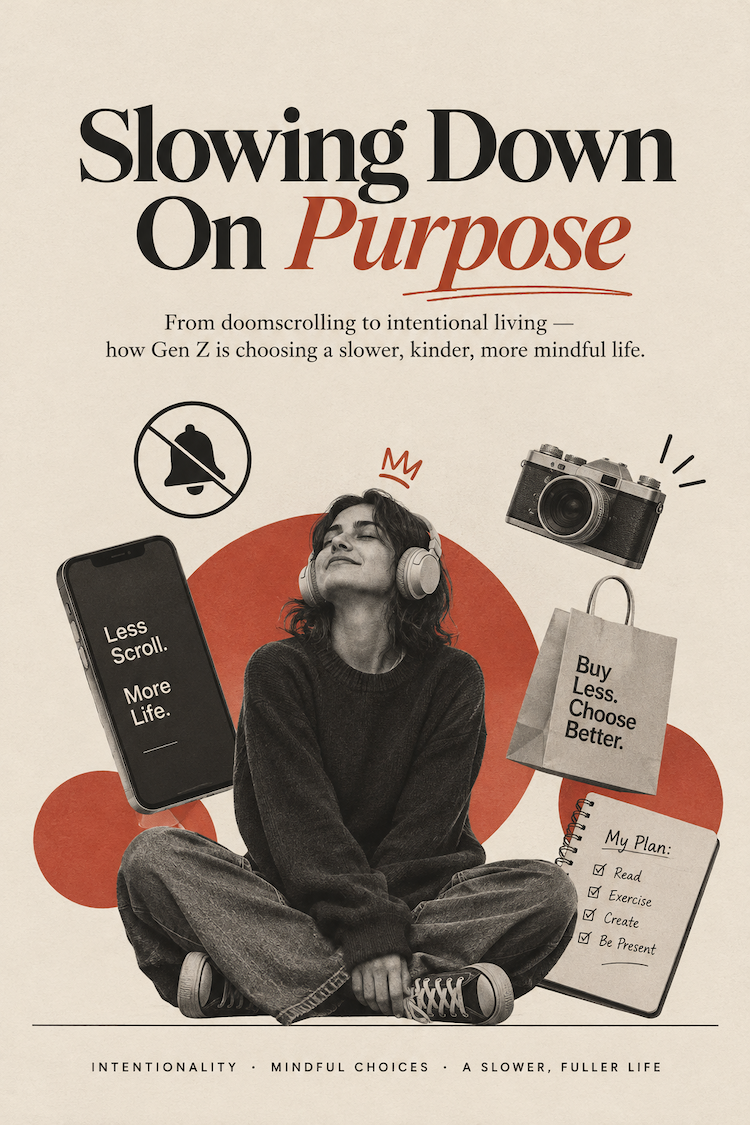
Gen Z grew up inside the fastest internet in history. Next day delivery and instant replies and endless feeds shaped how we think about time. Now a lot of 23 year olds are quietly pushing back. The new flex is not how fast you can move but how deliberately you can live. People my age are tired of being reachable at every hour and tired of reacting to everything. Burnout became a group chat topic before most of us even landed a full time job. So the trend that keeps showing up is intentionality. It means choosing what gets your attention instead of letting an algorithm choose for you. It is less about doing nothing and more about doing fewer things on purpose. That shift looks small on the surface but it is changing how an entire generation spends its money and time and energy.
The clearest place to see it is in our digital habits. Doomscrolling used to be a running joke but now plenty of people treat it like a real problem to fix. Screen time limits and grayscale modes and app timers are everywhere. Some friends of mine have switched to dumbphones on weekends just to feel what boredom is like again. Others have gone back to digital cameras and film and even physical planners. Public posting has cooled off too. A polished feed feels cringe to a lot of us now so people share in private group chats and photo dumps and close friends lists. The goal is no longer to be seen by everyone. The goal is to be known by a few people who actually matter. Being online is still normal but being online on autopilot is losing its appeal.
Money habits are following the same pattern. Gen Z has been called the generation that loves fast fashion hauls but the vibe is shifting fast. Thrifting and reselling and borrowing are all mainstream. De influencing videos tell people to skip the trendy product and ask whether they really need it. Underconsumption has become its own aesthetic with people proudly showing off a small wardrobe or a nearly empty shopping cart. Part of this is practical because rent is high and entry level salaries are not keeping up. Part of it is values because many of us care about waste and climate and where our stuff comes from. Either way the question has changed from how fast can I get it to is this worth it. Subscription audits and meal prepping and saving for experiences over things all come from that same mindset.
Intentionality is also reshaping work and relationships. A lot of young professionals are setting hard boundaries around their time. Turning off notifications after hours and saying no to meetings that could have been an email are now seen as healthy instead of lazy. Many of us want jobs that fit a life instead of swallowing it. Friendships are changing as well. Instead of hundreds of loose connections people are investing in a smaller circle through run clubs and book clubs and long dinners and real phone calls. Dating apps are getting the same treatment with more people calling for slow dating and clear communication over endless casual chatting. Even hobbies reflect this. Crochet and journaling and baking and pottery are booming because they cannot be rushed. Making something slowly with your hands feels like a quiet protest against a world that wants everything instantly.
None of this means Gen Z hates technology or ambition. We are still the generation that builds side hustles and learns new tools overnight and makes culture go viral in a single afternoon. And it is fair to admit that slow living can turn into another performance or another expensive aesthetic. Not everyone has the freedom to log off or quit a draining job. But the core idea is bigger than any trend. It is the habit of pausing long enough to ask why. Why am I scrolling and why am I buying this and why am I saying yes. In a culture obsessed with speed that pause might be the most radical move we have. If it keeps spreading then intentionality will not just be a phase for 23 year olds. It will be how our generation defines a life that actually feels like ours.