Haryanvi Music and the New Voices of the Heartland
Haryanvi Music and the New Voices of the Heartland


Haryanvi Music and the New Voices of the Heartland
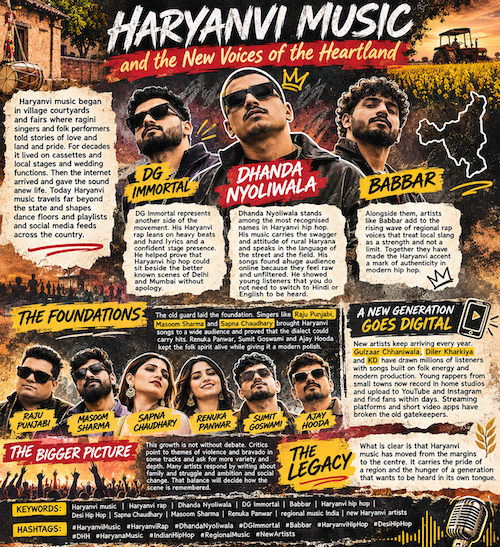
Haryanvi music began in village courtyards and fairs where ragini singers and folk performers told stories of love and land and pride. For decades it lived on cassettes and local stages and wedding functions. Then the internet arrived and gave the sound a new life. Today Haryanvi music travels far beyond the state and shapes dance floors and playlists and social media feeds across the country. The old guard laid the foundation. Singers like Raju Punjabi and Masoom Sharma brought Haryanvi songs to a wide audience and proved that the dialect could carry hits. Sapna Chaudhary turned stage performance into a cultural force that crossed borders of language and region. Artists such as Renuka Panwar and Sumit Goswami and Ajay Hooda kept the folk spirit alive while giving it a modern polish. Their work made sure the next generation had a sound to build on.
That next generation chose rap. Dhanda Nyoliwala stands among the most recognised names in Haryanvi hip hop. His music carries the swagger and attitude of rural Haryana and speaks in the language of the street and the field. His songs found a huge audience online because they feel raw and unfiltered. He showed young listeners that you do not need to switch to Hindi or English to be heard. You only need a strong voice and a story that feels true. DG Immortal represents another side of the movement. His Haryanvi rap leans on heavy beats and hard lyrics and a confident stage presence. He helped prove that Haryanvi hip hop could sit beside the better known scenes of Delhi and Mumbai without apology. Alongside him artists like Babbar add to the rising wave of regional rap voices that treat local slang as a strength and not a limit. Together they have made the Haryanvi accent a mark of authenticity in modern hip hop.
New artists keep arriving every year. Gulzaar Chhaniwala and Diler Kharkiya and KD have drawn millions of listeners with songs built on folk energy and modern production. Young rappers from small towns now record in home studios and upload to YouTube and Instagram and find fans within days. Streaming platforms and short video apps have broken the old gatekeepers. A single catchy hook can travel from a village to a metro city overnight. This growth is not without debate. Critics point to themes of violence and bravado in some tracks and ask for more variety and depth. Many artists respond by writing about family and struggle and ambition and social change. That balance will decide how the scene is remembered. What is clear is that Haryanvi music has moved from the margins to the centre. It carries the pride of a region and the hunger of a generation that wants to be heard in its own tongue.
-Devangshu Purohit