The Mentalist Is Having a Gen Z Moment: Why Everyone Is Suddenly Obsessed with Patrick Jane.
The Mentalist Is Having a Gen Z Moment: Why Everyone Is Suddenly Obsessed with Patrick Jane.


The Mentalist Is Having a Gen Z Moment: Why Everyone Is Suddenly Obsessed with Patrick Jane.
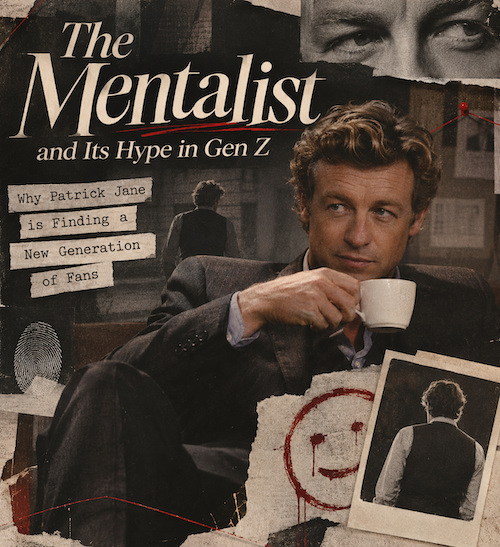
There is something strangely satisfying about watching someone walk into a room, observe a few tiny details and figure out exactly what everyone else is trying to hide. No complicated technology, no supernatural abilities and no dramatic superhero moments. Just an incredibly observant mind, a little manipulation and an unhealthy amount of confidence. This is probably why The Mentalist is finding a new audience among Gen Z.
Originally premiering in 2008, the crime drama starring Simon Baker as Patrick Jane has developed a lasting appeal that goes beyond its original television audience. While the series was already popular during its television run, its style of storytelling feels surprisingly compatible with today's internet culture. Clips, character edits, psychological observations and discussions about intelligence have helped introduce older television shows to a generation that might never have watched them otherwise.
And honestly, Patrick Jane is exactly the kind of fictional character the internet loves.
Why Patrick Jane Is the Internet's Favourite Kind of Intelligent
Patrick Jane is not your typical television detective. He does not depend on complicated equipment or traditional investigative techniques. Instead, he studies people. Their expressions, habits, insecurities, body language and reactions become clues.
What makes him particularly interesting is that his intelligence is not presented as completely serious or intimidating. Jane is playful, sarcastic, unpredictable and occasionally irritating. He enjoys being several steps ahead of everyone, but he rarely feels the need to prove it through dramatic speeches.
For Gen Z, which has developed an internet culture around analysing personalities, recognising manipulation and understanding human behaviour, this character is particularly interesting.
His ability to notice what others overlook also connects with the growing fascination around observation skills, emotional intelligence and social psychology. Watching Jane work almost feels like attending an entertaining lesson in human behaviour.
The Psychology Behind The Mentalist
One of the most interesting aspects of The Mentalist is how closely its central premise connects with psychological concepts.
The series explores observation, attention, memory, non-verbal communication, deception and persuasion. Jane frequently uses psychological manipulation to encourage suspects to reveal information they would otherwise keep hidden.
His methods are entertaining, but they also raise interesting questions about how people interpret behaviour.
For instance, people often assume that avoiding eye contact means someone is lying. In reality, there is no single reliable body-language signal that establishes deception. Context, individual differences and multiple sources of evidence matter.
This is where the series becomes particularly interesting from a psychological perspective. It encourages viewers to pay attention to human behaviour while reminding us, sometimes unintentionally, how easily confidence can be mistaken for accuracy.
Jane is not simply solving crimes. He is constantly challenging people's assumptions about what they know and what they believe.
The Patrick Jane Effect: Intelligence Without Trying Too Hard
There is a particular aesthetic associated with Patrick Jane that makes him such an appealing character.
His relaxed suits, waistcoats, slightly messy hair, calm expressions and effortless sarcasm create an identity that feels different from the usual television detective. He rarely looks like someone who is trying too hard to impress anyone.
This fits into a broader online fascination with fictional characters who appear intelligent, composed and observant.
Think of the popularity of Sherlock Holmes edits, Thomas Shelby aesthetics and other characters whose personalities revolve around strategic thinking and confidence. Patrick Jane fits comfortably into this category, although his personality is considerably more playful.
His appeal is not just about looking intelligent. It is about understanding situations without needing to dominate every conversation.
Why Older Television Shows Are Finding New Audiences
Gen Z has an interesting relationship with older entertainment. A show does not necessarily need to be new to become culturally relevant.
Social media platforms have made rediscovering older television series easier. A single character edit, memorable dialogue exchange or short scene can introduce an entire series to millions of potential viewers.
This has happened with several older shows, and The Mentalist fits naturally into this revival culture.
There is also something refreshing about its storytelling. In an entertainment landscape increasingly filled with fast-paced editing, complicated cinematic universes and constantly changing trends, the show's relatively straightforward detective format can feel comforting.
Each episode offers a mystery, an investigation and another opportunity to understand how Jane thinks. At the same time, the larger storyline involving Red John gives viewers a reason to keep watching.
Red John and the Addiction of a Good Mystery
It would be impossible to discuss The Mentalist without mentioning Red John.
The mysterious serial killer responsible for the murder of Patrick Jane's wife and daughter provides the emotional foundation of the entire series. Beneath Jane's humour and seemingly carefree personality is a man dealing with extraordinary grief and an obsession with finding justice.
This contrast makes him much more than an entertaining genius.
The show gradually reveals the difference between the person Jane presents to the world and the person he actually is. His humour becomes a defence mechanism, his confidence sometimes hides vulnerability, and his intelligence is closely connected to his desire for revenge.
For younger audiences interested in morally complicated characters and emotionally layered storytelling, this is an important part of the show's appeal.
Is The Mentalist Worth Watching in 2026?
Absolutely. Particularly if you enjoy crime dramas that focus more on human behaviour than action.
The series has seven seasons, giving viewers plenty of time to become invested in its characters and overarching mysteries. Simon Baker's performance is arguably its biggest strength. He makes Patrick Jane charming without making him completely likeable, intelligent without making him unbearable and vulnerable without losing his sense of humour.
Of course, some elements of the show reflect the television conventions of the late 2000s. Certain investigative techniques and portrayals of psychology should not be treated as scientifically accurate. However, its central character and storytelling remain entertaining.
Perhaps the biggest reason The Mentalist deserves another look is that it makes intelligence entertaining. It celebrates curiosity, observation and the ability to question what appears obvious.
And in a generation that spends so much time analysing people, relationships, fictional characters and social behaviour, Patrick Jane feels like a surprisingly relevant character to rediscover.