The Handloom Comes Home
The Handloom Comes Home


The Handloom Comes Home
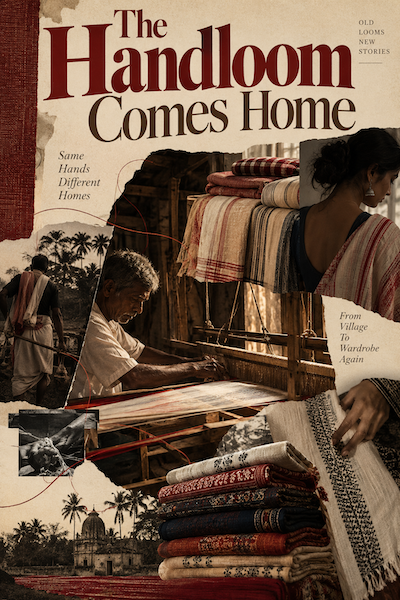
Walk through any college campus in India today and you will notice something new. A Chanderi kurta sits easily beside a pair of white sneakers. A Kanjivaram border has been stitched onto a bomber jacket. A young woman wears the cotton saree her grandmother once wore and pairs it with a plain black shirt. None of this feels like costume. It feels like a quiet conversation between generations.
For decades Indian fashion looked outward. Western labels meant ambition and fast fashion meant freedom. Traditional weaves were saved for weddings and festivals and then folded away again. That is now changing and the change is being led by people in their teens and twenties.
Part of the reason is the way young Indians discover things. Social media has turned regional textiles into something worth sharing. A short video about Ikat from Odisha can reach millions in a day. Bandhani from Gujarat and Ajrakh from Kutch and Kalamkari from Andhra Pradesh are no longer just names in a textbook. They are trending hashtags and they are being worn to cafes and offices and concerts.
Another reason is a growing unease with disposable clothing. Many young buyers now ask who made a garment and how long it took. A handloom saree can take days or even weeks to weave. That slowness once seemed like a weakness. Today it reads as value. Thrift stores and upcycling studios have joined the movement too. Old sarees become dresses and old dupattas become tote bags. Nothing is wasted and every piece carries a story.
The stakes go well beyond style. Handloom weaving remains one of the largest sources of rural employment in the country and much of that work is done by families who have practised the craft for generations. Every time a young person chooses a handwoven piece over a mill made copy a weaver gets a little more security. National Handloom Day on the seventh of August now brings real attention each year and it is no longer only a government ritual.
Still the revival is not simple. Power loom imitations flood the market and are often sold as handloom at lower prices. Genuine pieces cost more and many weavers still earn too little for their skill. Some designers borrow patterns from communities without credit or fair payment. Geographical Indication tags and direct to weaver platforms help but awareness matters most. Buyers have to learn to read a fabric and ask honest questions.
There is also a deeper cultural question here. Clothing in India has always carried meaning about region and faith and caste and occasion. When young people mix these codes they are not erasing them. They are asking what tradition means in a country that is both ancient and restless. A saree worn with sneakers says that heritage does not have to stay behind glass.
Perhaps that is the real story. Fashion in India is not choosing between old and new. It is learning that the old can be worn on an ordinary Tuesday and that the future may be woven by hand.
-Devangshu Purohit