The Weight That Arrives Without a Reason
The Weight That Arrives Without a Reason


The Weight That Arrives Without a Reason
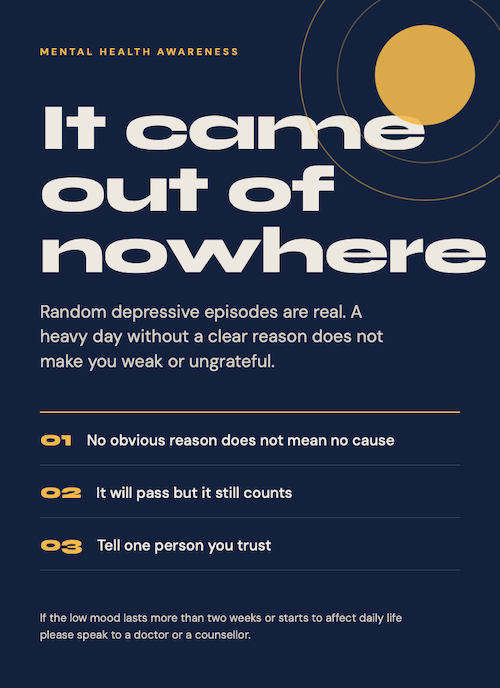
Some days begin like any other. The tea is hot and the work is waiting and nothing has gone wrong. Then around noon something shifts. The room feels heavier. Small tasks feel enormous. You look for the reason and find nothing. No fight and no bad news and no failure. Just a grey that has settled over everything.The Weight That Arrives Without a Reason
This is what many people call a random depressive episode. It is a stretch of low mood that seems to arrive uninvited. The word random is a little misleading though. Your mind rarely does anything for no reason. It is more that the cause is hidden or too small to notice or too tangled to name.
Sometimes the trigger is physical. A few nights of poor sleep can quietly drain the mind. Skipped meals and dehydration and too little sunlight and hormonal shifts can all pull mood down without announcing themselves. Sometimes the trigger is emotional and delayed. A stress we pushed aside last month shows up this week wearing a different face. An anniversary or a song or a smell can wake a memory before the mind has caught up. Some people feel the dip around seasons or exam periods or long stretches of loneliness. Others find the episode comes after a big achievement when the pressure finally lets go.
What makes these episodes hard is the guilt that follows. We tell ourselves we have no right to feel this way. We compare our life with someone who has it worse and decide we are being dramatic. That second layer of shame does more damage than the low mood itself. Sadness without a reason is still sadness. It does not need permission.
It also helps to know what an episode is not. A few low days are not the same as a clinical diagnosis. Depression as a condition usually means the low mood lasts most of the day and most days for at least two weeks and begins to affect sleep and appetite and concentration and the ability to function. Only a trained professional can tell the difference. But even when it is not a diagnosis the heaviness deserves care.
So what can help in the moment? Start small. Drink water and eat something real. Step outside for even ten minutes of daylight. Move your body gently with a walk or a stretch. Lower the bar for the day and aim for one or two small tasks instead of ten. Write down what you are feeling without trying to fix it. Naming a feeling often shrinks it. Most of all tell one person you trust. You do not need a perfect explanation. Saying I am having a heavy day is enough.
Over time it helps to notice patterns. Keep a simple note of your sleep and your mood and what came before the dip. Many people discover that the randomness fades once they see the rhythm underneath. This is also useful information to share with a counsellor or doctor if you choose to speak to one.
And if the heaviness stays beyond two weeks or begins to feel unbearable or you find yourself thinking about harming yourself please reach out to a mental health professional or a trusted person right away. Asking for help is not a sign that something is wrong with you. It is a sign that you are taking yourself seriously.
The grey does lift. It may not lift on command but it does lift. Until then be as kind to yourself as you would be to a friend sitting in the same silence.
-Devangshu Purohit