The Pratfall Effect and Why Mistakes Can Make Us More Likeable
The Pratfall Effect and Why Mistakes Can Make Us More Likeable


The Pratfall Effect and Why Mistakes Can Make Us More Likeable
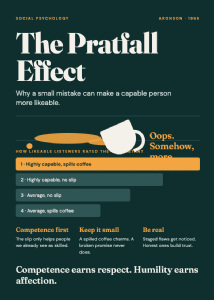
We are taught from childhood that mistakes are embarrassing and that looking perfect is the best way to win respect. Yet social psychology has found something surprising. Under the right conditions a small blunder can make a person more attractive to others and not less. This idea is called the pratfall effect and it comes from a 1966 study by psychologist Elliot Aronson and his colleagues. Participants listened to recordings of a person taking part in a quiz contest. In one version the contestant was highly capable and answered almost every question correctly. In another version the same type of contestant answered well and then clumsily spilled a cup of coffee over themselves. Listeners rated the capable contestant who spilled the coffee as the most likeable of all. Meanwhile an average contestant who made the same mistake was rated as less likeable than an average contestant who did not. The message was striking. A slip makes us warmer only when we already see the person as skilled.
Why would a blunder improve someone image. One explanation is that flawless people can seem distant and intimidating. When a talented person trips up they suddenly feel human and approachable. We stop comparing ourselves against an impossible standard and start to relate to them. Another explanation involves trust. People who show their imperfections seem more honest because they are not hiding behind a polished mask. Later research confirmed that the effect is delicate and depends on several conditions. The mistake should be small and harmless and not something that damages other people. The person should already have a reputation for competence. Personality matters too since observers with high self esteem tend to like the flawless expert while observers with lower self esteem prefer the one who slips. Gender and context have also shown different results across studies which is why psychologists treat the effect as a pattern and not a rule. A serious error such as lying or breaking a promise never produces the same warmth. A spilled coffee is charming and a betrayed trust is not.
There are practical lessons here for daily life. Speakers who laugh calmly when their slides freeze often win more goodwill than those who panic. Teachers who admit they do not know an answer and promise to find out teach students that learning never ends. Brands that publicly own up to small errors can strengthen loyalty when they respond with humour and honesty. In personal relationships showing a bit of vulnerability tends to invite closeness. This does not mean you should fake mistakes on purpose because people can sense when a flaw is staged. It simply means that the pressure to appear perfect may be unnecessary. Competence earns respect and humility earns affection and the two together are a powerful mix. If you build real skill and stay relaxed about your small stumbles others are likely to feel comfortable around you. The goal is not to be flawless but to be someone people feel safe being imperfect with.
-Maitrayee Repal