Growing Up Online and What Social Media Really Does to Teens
Growing Up Online and What Social Media Really Does to Teens


Growing Up Online and What Social Media Really Does to Teens
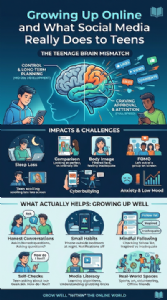
Being a teenager has never been easy but being one today comes with an extra layer that older generations never had to face. Most teens reach for their phones before they say good morning to anyone at home. Within seconds they see what their friends did last night and what strangers think is trending and who got invited to which plan. It feels harmless because it is only scrolling. But the teenage brain is still under construction. The part that handles impulse control and long term planning keeps developing until the mid twenties. Meanwhile the part that craves approval and attention runs at full speed. That mismatch is why likes and views and comments hit so hard at this age. A post that gets ignored can feel like public rejection. A post that goes viral can feel like proof of self worth. Neither feeling is a steady base for building an identity. Adolescence is the stage where people ask who they are and where they belong. Social media quietly answers those questions with numbers and that is where the trouble begins. Teens are not weak for caring about this. They are simply doing what their developing minds are built to do inside a space designed to keep them hooked.
The effects show up in small ways first. Sleep is usually the earliest casualty because scrolling late at night feels like free time that belongs only to the teen. Tired teens become irritable and anxious and struggle to focus in class. Then comes comparison. Everyone online posts the best version of their life so a teen scrolling alone in their room ends up measuring an ordinary day against the highlight reel of everyone else. Body image takes a hit too especially with filters that make faces and bodies look flawless. Many teens know the photos are edited but the feeling of not measuring up stays anyway. Fear of missing out adds another layer because seeing a friend group hang out without you can sting more than any argument ever could. Then there is cyberbullying which follows teens home in a way playground bullying never could. It does not end when the school bell rings. Research links heavy use with higher rates of anxiety and low mood but the link is not simple. Some teens use social media to find supportive communities and creative outlets and friends who understand them. The problem is rarely the app itself. It is how much time it takes and what it replaces.
Here is what actually helps. Banning phones sounds simple but it often backfires because it cuts teens off from where their friends live and talk. A better approach starts with honest conversation. Parents and teachers who ask curious questions instead of giving lectures tend to learn far more about what teens experience online. Small habits matter too. Keeping phones out of the bedroom at night protects sleep. Turning off unnecessary notifications reduces the constant pull. Following accounts that make you feel inspired instead of inadequate changes the whole mood of a feed. Teens can also check in with themselves by asking how they feel after scrolling for twenty minutes. If the answer is worse then it is time to step away. Schools can help by teaching media literacy so students understand how algorithms work and why content is made to grab attention. Most importantly teens need real world spaces where they feel valued for who they are and not for how they look or how many people reacted. Sports and art and volunteering and friendships offline all build a sense of self that no screen can give or take away. Growing up online is not going away so the goal is to grow up well within it.