Harry Potter and Obsession Why We Cannot Stop Returning to Hogwarts
Harry Potter and Obsession Why We Cannot Stop Returning to Hogwarts


Harry Potter and Obsession Why We Cannot Stop Returning to Hogwarts.
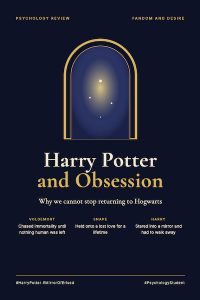
Look at the story first because the villains and the heroes share more than they admit. Voldemort is the clearest case. His fear of death grows so intense that he tears his own soul apart to avoid it. He becomes less human with every step and the obsession that was meant to save him ends up destroying him. Snape shows a quieter and sadder version. His devotion to Lily shapes every decision he makes for decades and it gives him courage but also keeps him trapped in grief. Then there is the Mirror of Erised which for me is the most psychological object in the series. It shows each person what they desire most and Harry sees his family. Dumbledore warns him that people have wasted away in front of it. I think that warning is the real moral centre of the books. Wanting something is human. Letting the wanting replace your life is where obsession begins.
Now turn the lens on us the readers. Psychology offers a few ideas that fit the fandom well. Social identity theory from Henri Tajfel suggests that we build part of our self image from the groups we belong to. Being a Gryffindor or a Slytherin or a Ravenclaw is a perfect example. A sorting quiz takes five minutes yet people defend their house like a hometown. Parasocial attachment adds another layer. This is the one sided bond we form with characters and public figures and it explains why Hermione and Luna can feel like old friends. Nostalgia then glues everything together because the books are tied to childhood and school and the first time many of us fell in love with reading. Add the films and the theme parks and the merchandise and the reread rituals and you get a world designed to be revisited. For most fans this is a joy. It becomes a problem only when the fictional world starts to replace the real one.
So where is the line between passion and unhealthy obsession. My view is simple. A healthy fandom adds to your life. It gives you friends and creativity and comfort on bad days. It sends you to conventions and book clubs and late night debates about who the real Half Blood Prince was. An unhealthy one narrows your life. It pulls you away from people and responsibilities and leaves you feeling empty when the book is closed. The series itself teaches this lesson through the Mirror of Erised. Harry learns to walk away from it and returns to the living world. That choice matters more than any spell. My verdict is five stars for storytelling and four and a half for how honestly it explores desire. If you love Harry Potter then keep rereading it and keep sorting your friends into houses. Just remember that the best magic in the story was never the wands. It was the people who stood beside Harry in the real castle of life.