Vasota: Where the Trek Begins After the Road Ends
A journey through the jungles of Jawali, the legacy of Chhatrapati Shivaji Maharaj, and one of the Sahyadris" most formidable forest forts.


Vasota: Where the Trek Begins After the Road Ends
A journey through the jungles of Jawali, the legacy of Chhatrapati Shivaji Maharaj, and one of the Sahyadris' most formidable forest forts.


You don't simply walk into Vasota. You leave the familiar world behind before you enter it. Before Vasota, There Was Jawali
To understand Vasota, you have to understand Jawali. The Jawali region was not ordinary terrain. It was a landscape of thick forests, steep valleys, and narrow mountain passages exactly the kind of geography that could become a natural fortress. The name Jawali itself is traditionally associated with Jayavalli, referring to a region of trees and creepers. Historically, the area was controlled by the More family, with Chandrarao More emerging as an important local power. For Shivaji Maharaj, controlling Jawali meant much more than acquiring another piece of land. It meant gaining strategic access through an extremely difficult part of the Sahyadris.
The conquest of Jawali in the 1650s became an important stage in the expansion of Swarajya. After defeating Chandrarao More, Shivaji Maharaj consolidated control over the region and captured Vasota in 1655. And this is where the history of Vasota becomes fascinating. Because when you walk through that jungle today, you are walking through the same landscape that once gave a major military advantage to those who understood it.
Why Vasota Was So Difficult to Conquer
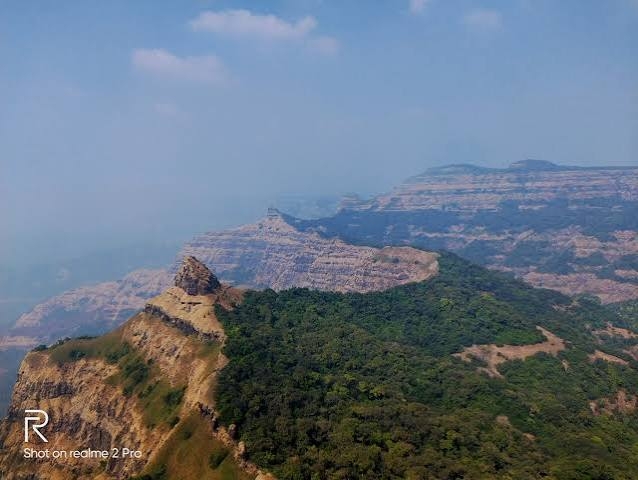
Look around during the trek. Dense forest. Steep slopes. Deep valleys. Sudden cliffs. Limited approaches. That is not just beautiful geography. That was defence. The old Satara Gazetteer describes Vasota as standing on the edge of the Sahyadris, surrounded by dense forest and protected by extremely steep escarpments. The western side drops dramatically towards the Konkan, making the fort naturally difficult to approach. This explains why forest forts like Vasota were so valuable.
A massive army could be less useful in terrain where only a few people knew the routes. The mountain itself became a fort. The jungle became another wall. And the cliffs became another line of defence. Perhaps this is why the fort feels so different from the more accessible forts of Maharashtra. At Vasota, the journey to the fort is itself part of the fortification.
And Then Came Shivaji Maharaj
Historical records attribute the original fort to the Shilahara ruler Bhoja II of Kolhapur, around the late 12th century. Before Shivaji Maharaj's conquest, the fort had passed through the hands of the Shirkes and Mores. In 1655, after the campaign against the More power in Jawali, Shivaji Maharaj captured Vasota. And he gave it a new name:
The name itself evokes the character of the fort: a tiger-like stronghold hidden inside the Sahyadris. Although the name Vasota eventually remained more commonly used, the name Vyaghragad continues to remind us of its place in Shivaji Maharaj's fort network. Imagine the strategic thinking behind it.
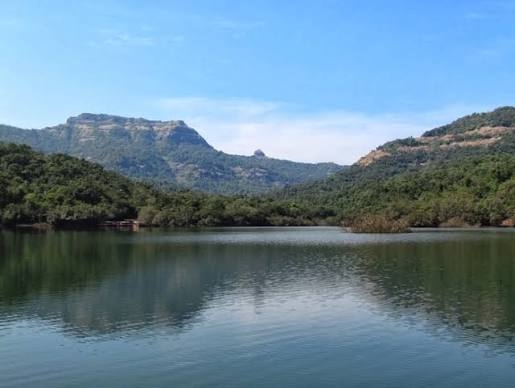
A fort hidden deep inside the forest. Difficult to approach. Surrounded by natural barriers. Connected to the wider geography of Jawali and the Konkan. From today's trekking trail, it can simply look like an adventurous destination. But in the 17th century, this landscape was a strategic asset. First, You Cross the water. Centuries later, the journey begins differently. You start at Bamnoli. You board a boat. And the Shivsagar reservoir carries you towards the forest. The water was created much later, with the Koyna Dam transforming the surrounding landscape. Several settlements in the area were submerged or relocated as the reservoir came into existence. So even the landscape you see today is layered with history. The old routes, villages, and valleys belong to one era. The reservoir belongs to another. The fort belongs to an even older story. And you travel through all of them in a single morning.
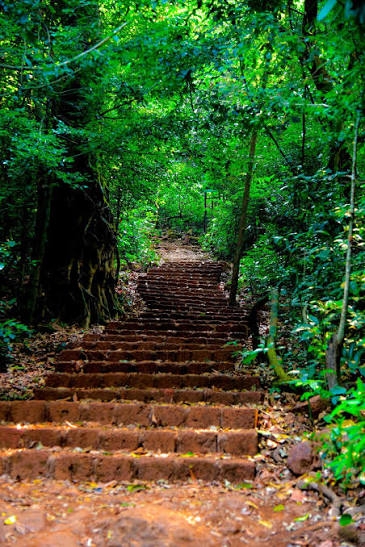
Then Comes the Jungle. Once you leave the boat, Vasota changes character completely. The open water disappears. The forest closes around you. The sound of the boat fades. Your group becomes quieter. You begin noticing things you normally ignore. Leaves moving somewhere above. Bird calls from deep inside the trees. The sound of your own footsteps. The occasional crack of a branch. This is the Koyna landscape, one of Maharashtra's important forest ecosystems. And suddenly the word “jungle” stops sounding like a description and starts feeling like an experience. The Koyna forests support rich wildlife, which is one reason this landscape remains environmentally sensitive and protected. So Vasota demands something from the trekker: respect.
Not shouting. Not littering. Not disturbing wildlife. Not treating the forest merely as a background for Instagram reels. You are entering an ecosystem much older than your itinerary.
The Fort Appears. After the climb, the forest eventually opens up. And there it is. Vasota. Not a grand palace. Not a perfectly preserved monument. Mostly ruins. Stone walls. Water tanks. Temple remnants. Old defensive structures. But perhaps that makes the experience more powerful. Because when you stand among those ruins, you are not looking at a monument that has been perfectly preserved for tourism. You are looking at what time has left behind.
The Maharashtra Gazetteer records remains of fortifications, buildings, water structures, and other features, while the Marathi Vishwakosh notes archaeological traces connected with the fort's older phases. The fort has seen dynasties, Maratha power, the Peshwa period and the British. Its walls have witnessed people whose names we remember and thousands whose names history forgot.
Vasota's Story Didn't End With Shivaji Maharaj
This is another reason the fort deserves more than a quick photograph.
Vasota continued to have a dramatic history after Shivaji Maharaj. During the Peshwa period, it became associated with the famous resistance of Tai Telin, who held the fort against Bapu Gokhale's forces for months. Later, Vasota was used as a place of confinement, and during the British campaign of 1818, the fort was bombarded and eventually captured. So when you walk across Vasota today, you are not walking through one chapter of history. You are walking through several. Shilahara history. The Mores of Jawali. Shivaji Maharaj's Swarajya. The Peshwa period. The British conquest. And finally, the modern era of conservation and trekking.
One mountain. Many centuries. And Then You See the view. After spending so much time inside the forest, reaching an open viewpoint feels almost cinematic. The dense green landscape suddenly gives way to enormous views of the Shivsagar backwaters and the surrounding Sahyadris. The forest that felt endless from inside suddenly looks like a giant green carpet. And you stand there wondering: How did people look at these mountains hundreds of years ago? How did Shivaji Maharaj and his Mavalas understand this terrain? How many journeys, battles, escapes, and stories happened somewhere across these hills? The view suddenly becomes more than a view.
It becomes context. Maybe That Is the Real Beauty of Vasota. Modern trekking sometimes becomes a checklist. Another fort. Another summit. Another photograph. Another Instagram story. But Vasota rewards something different. Slow down. Look at the jungle. Look at the cliffs. Look at the ruins. Think about Jawali. Think about why Shivaji Maharaj wanted this region. Think about how geography became strategy. And then look at the same landscape today. The armies are gone. The political boundaries have changed. The old kingdoms have disappeared. But the mountains remain. That is the strange power of the Sahyadris. People come and go. The mountain remembers.
The Trek Is Also a Lesson in Swarajya
Perhaps there is one more reason Vasota feels special. Shivaji Maharaj's idea of Swarajya was not created on flat, convenient ground. It grew through an understanding of Maharashtra's geography. Fort after fort. Valley after valley. Pass after pass. Forest after forest. The landscape itself became part of the strategy. Vasota reminds us that history is not always found inside museums. Sometimes history is under your shoes. Sometimes it is hidden behind trees. Sometimes it is standing on a cliff overlooking the Konkan. And sometimes, it is waiting quietly inside an old stone wall.
So Don't Just “Do” Vasota. If you go to Vasota, don't make it only another trek you completed. Listen to the forest. Look at the ruins. Remember Jawali. Remember the Mores. Remember Shivaji Maharaj and the Mavalas who understood these mountains as more than scenery.
And remember that this is a protected forest landscape, not merely an adventure playground. Current access is regulated, and visitors are expected to follow Forest Department rules, use designated routes, and avoid plastic, noise, and disturbance to wildlife. The best way to experience a place like Vasota is not to conquer it. It is to enter it with curiosity, walk through it with respect, understand its history, and leave the jungle almost exactly as you found it.
The boat takes you to the forest. The forest takes you to the fort. The fort takes you into history. And somewhere along that journey, Vasota takes you away from the life you were rushing through. Perhaps that's why the trek stays with you. Not because you reached another fort.
But because, for a few hours, you walked through a landscape where nature, history, and the legacy of Swarajya still stand together.