The Kapoor Legacy and the Cult Classics That Refuse to Fade
The Kapoor Legacy and the Cult Classics That Refuse to Fade


The Kapoor Legacy and the Cult Classics That Refuse to Fade
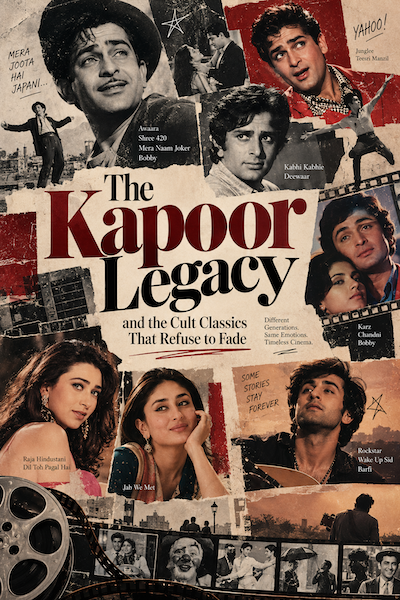
Every film lover has a family they keep coming back to and mine is the Kapoors. I am twenty three and I grew up watching these films on lazy Sunday afternoons with my grandfather who treated every Raj Kapoor song like a prayer. Over the years I realised something odd. No other family in Indian cinema has given us so many cult classics across so many decades. A cult classic is not simply a hit. It is a film that was sometimes ignored on release yet found a loyal audience that kept it alive through reruns and late night television and now through streaming and memes. The Kapoor family has made and starred in a remarkable number of them. From the black and white dreams of the fifties to the colourful heartbreak of the twenty first century their films carry a certain signature. They are emotional and musical and unafraid of looking foolish for the sake of feeling. In this review article I look at the films that built that legacy and ask why they still matter to a generation that never saw them in a theatre.
It all begins with Raj Kapoor the original showman. Awaara from 1951 gave us a tramp with a broken heart and a fan following that stretched from India to Russia and Turkey. Shree 420 followed in 1955 and Mera Joota Hai Japani became an anthem of the common man. The finest example of cult status though is Mera Naam Joker from 1970. It was a long and deeply personal film about a clown who smiles through pain and audiences rejected it at first. The failure nearly ruined Raj Kapoor financially. Today critics and young viewers treat it as a masterpiece about loneliness and ambition. Then came Bobby in 1973 which reinvented teenage romance with Rishi Kapoor and Dimple Kapadia and started a wave of fashion that still gets copied. Watching these films now I notice how bold they were. They spoke about poverty and class and heartbreak with a tenderness that few modern films attempt. Raj Kapoor understood that cinema is a conversation with the heart before it is a conversation with the mind.
The next generation kept the flame alive in very different ways. Shammi Kapoor turned himself into the rebel star of the sixties with Junglee and Teesri Manzil. His wild energy and famous yahoo cry made him the original cool hero. Teesri Manzil remains one of the best mystery musicals ever made with R D Burman delivering a soundtrack that sounds fresh even today. Shashi Kapoor chose a gentler path and brought grace to films like Kabhi Kabhie and Deewaar where his reply about having a mother became one of the most repeated moments in Hindi cinema. Rishi Kapoor then became the eternal romantic with Karz and Chandni. Karz deserves special mention because its reincarnation plot and its music inspired decades of tributes including Om Shanti Om. These actors never copied each other. Each carved a lane of his own and each left behind a film that fans hum and quote and argue over to this day.
The younger Kapoors carry the same spirit into our own time. Karisma Kapoor lit up the nineties with Raja Hindustani and Dil Toh Pagal Hai and her dance energy still feels unmatched. Kareena Kapoor gave us Geeta in Jab We Met who is perhaps the most loved heroine of my generation. Ranbir Kapoor completes the circle with Rockstar and Wake Up Sid and Barfi. Rockstar in particular was divisive at release but is now worshipped by college students who see their own restlessness in it. A.R. Rahman built a soundtrack that people still play on long drives. What connects all of these films is feeling. They ask us to cry and laugh and sing along without shame. My verdict is simple. The Kapoor classics earn four and a half stars for craft and a full five for emotional impact. If you want to understand why Hindi cinema is loved across the world then start with this family and press play. You will find that the legacy is not behind us. It is still being written.