Why We Feel Lonely Even When We Are Never Alone
Why We Feel Lonely Even When We Are Never Alone


Why We Feel Lonely Even When We Are Never Alone
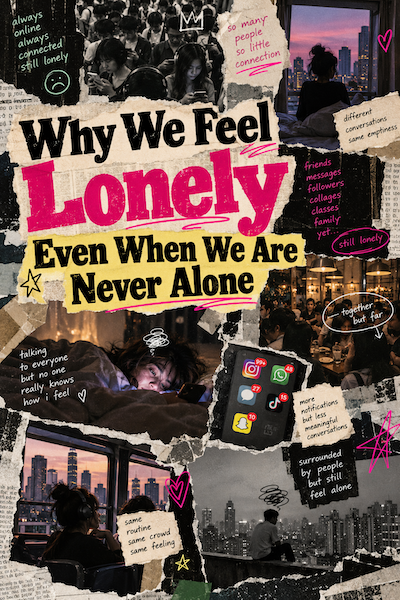
So why might online life leave that need unmet. One reason is quantity versus quality. Robin Dunbar suggested that humans can manage about 150 stable relationships and only a handful of truly close ones. A follower count does not change that. Research also suggests that scrolling passively through the lives of others seems linked with feeling worse while chatting with close friends seems linked with feeling better. These findings are mixed and mostly correlational but the pattern is worth noticing. Another reason is that online we often show a polished version of ourselves. If nobody sees the real us then even being liked can feel hollow because we sense that the edited version is the one being liked.
Loneliness also changes how we think. Research suggests that lonely people become more sensitive to social threats like rejection or being ignored. A message that was seen but not answered starts to feel enormous. This can make us pull back or act guarded which makes connection harder and loneliness deeper. Psychologists describe this as a self reinforcing loop. Life transitions can trigger it too. Moving to a new city for college or starting a first job often means leaving behind the people who knew us best. Many Gen Z students also had key social years disrupted by the pandemic and that may have made forming new bonds feel harder than it should.
It also matters because loneliness is not just a feeling. Large reviews have linked long term loneliness with higher risks of depression and poor sleep and heart problems. Some analyses have compared its health impact with smoking several cigarettes a day although those comparisons are debated. In 2023 the US Surgeon General released an advisory calling loneliness and isolation a public health concern. So it deserves to be taken seriously instead of being brushed off as dramatic. Feeling lonely does not mean something is wrong with you. It means you are human and wired for connection.
So what helps. Think small and real. Reach out to one person with a specific plan instead of just reacting to their story. Join something built around a shared interest like a class or a club because repeated contact is how friendships usually grow. Practise being a little more honest in conversations since depth is what makes connection feel real. Be patient because good friendships take time and a few awkward meetings are normal. And be kind to yourself along the way. If loneliness feels heavy or lasts for weeks please speak to a counsellor or someone you trust. Reaching out is not weakness. It is exactly what that signal is asking you to do.