Bangladesh Stitches Clothes for the Whole World But Forgot Some of Its Own People.
Bangladesh Stitches Clothes for the Whole World But Forgot Some of Its Own People.


Bangladesh Stitches Clothes for the Whole World But Forgot Some of Its Own People.
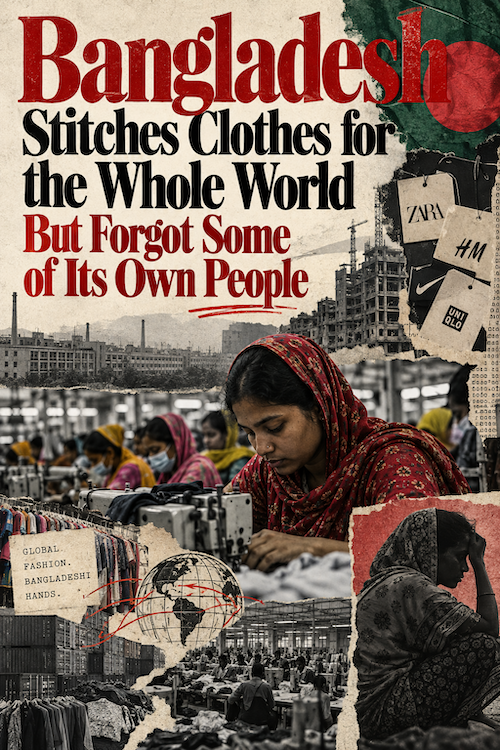
Think about the last time you got dressed. Probably zero brain cells were involved. Now imagine the same routine taking ten extra minutes or needing another person or just feeling like wearing sandpaper. That is daily life for many people with disabilities and sensory sensitivities. A recent Business Standard feature asks why Bangladesh makes clothes for the world but not for everyone at home. The country is one of the biggest garment makers on the planet yet its domestic adaptive fashion market is almost empty. Families and neighbourhood tailors usually alter regular clothes while brands stay out of it.
Adaptive fashion is not hospital wear or some niche costume. It is regular clothing designed so dressing feels easier and more comfortable for people with disabilities or chronic illness or temporary injuries. Think magnetic closures instead of tiny buttons and trousers cut to sit right on a wheelchair user and seams smooth enough for sensitive skin. The global market was valued at around 1.53 billion dollars in 2025 according to Grand View Research and the World Health Organization says roughly one in six people worldwide lives with a disability. That is not a niche. That is a crowd. Designer Tania Afroz tried adaptive pieces in Dhaka back in 2022 including a gender neutral flight suit but there is little sign it grew into a movement.
My take is that this is a classic fashion blind spot. We obsess over trends and drops while ignoring who gets left out of the fitting room and I honestly wonder how many Indian labels have even tried. The fix does not need a revolution. One retailer can launch a small accessible line and a fashion school can add one adaptive design brief and a manufacturer can test a small local run. What is missing is the will. Fashion loves saying it is for everyone. Maybe it is time the clothes agreed.