Mona Bhujel Walks Chanel as India Asks Who Gets the Credit
Mona Bhujel Walks Chanel as India Asks Who Gets the Credit


Mona Bhujel Walks Chanel as India Asks Who Gets the Credit
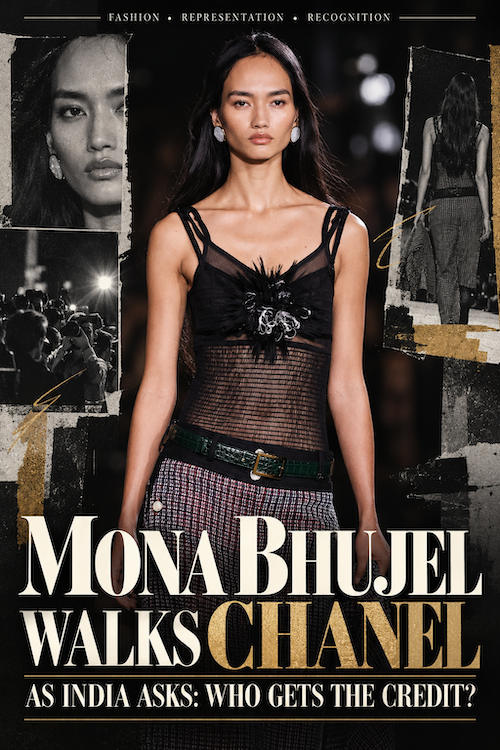
Fashion gave India two very different stories this year. In October 2026 model Mona Bhujel walked for Chanel in Paris. Months earlier in April Ralph Lauren faced anger in India over a skirt. One story celebrated Indian people on the biggest stage in fashion. The other asked whether Indian craft gets the same respect. Together they show an industry that wants India but is still learning how to credit it.
Bhujel walked in the Chanel Spring/Summer 2027 show at the Grand Palais on October 5 and appeared in look number 17 of 83. She joined fellow Indian models Bhavitha Mandava and Lakshmi Menon on the same runway. Three Indian women on one Chanel catwalk is a milestone worth marking. Her path was not quick. She was scouted in 2020 and then faced a string of rejections once the industry reopened after the pandemic. She has said she hopes her success opens doors for talent from the Northeast of India. That hope matters because representation is not only about being seen once. It is about being seen again and again until nobody finds it unusual.
The craft story began on a different note. Ralph Lauren sold a printed cotton wrap skirt priced at Rs 44800 and described it as inspired by Bandhani but made no mention of India or of the Rajasthani and Gujarati artisans behind the craft. Bandhani is a tie dye tradition that artisans have practised for generations. Critics online argued that a printed version sold at luxury prices turns a handmade craft into a surface pattern. The anger also followed an earlier row in which the brand showed jhumka earrings as vintage accessories without noting their Indian roots. Reports later said the brand acknowledged the inspiration publicly after the backlash grew.
This is not a new pattern. In June 2025 Prada showed sandals at Milan Fashion Week that resembled Kolhapuri chappals and priced them above Rs 1.25 lakh while the artisans of Maharashtra sell the originals for around Rs 400. The brand admitted inspiration only after the criticism. Prada later collaborated with the artisans behind the footwear. That sequence is important. It suggests public pressure can move even the most powerful houses.
It would be too simple to say these two stories are the same. Chanel was not part of the Bandhani or Kolhapuri debates and its runway moment deserves to be celebrated on its own terms. But the stories sit side by side for a reason. Both ask who is visible and who benefits. A model on a runway is visible by definition. An artisan in Gujarat or Maharashtra usually is not. When a luxury label sells the look of a craft without naming its home the artisan becomes invisible while the brand collects the value.
Defenders of the industry say fashion has always borrowed and that inspiration is how design travels. That is true. Critics do not ask brands to stop drawing from Indian tradition. The expectation they describe is simple. Acknowledge the source and work with local artisans and make sure those artisans share in the benefit. Seen this way the dispute is less about whether to borrow and more about how.
There are practical steps that would settle much of the anger. Brands can name the craft and the region in their product descriptions. They can partner with artisan groups before a design is sold and not after it goes viral. They can be open about how much of the price reaches the people who hold the skill. None of this is hard compared with building a global luxury business.
Indian consumers have also changed the terms. A single post can now reach millions within hours and brands feel it quickly. Young Indians in particular are proud of their craft heritage and unwilling to see it erased. That pride is the same energy that cheers when Mona Bhujel walks a Paris show. It is a demand to be recognised both as talent and as tradition.
The best outcome is a fashion world where an Indian model can open a Chanel show and an Indian artisan can see her name beside a luxury design. Until both happen the conversation will continue and it should.