Functioning Is Not the Same as Fine: What Functional Depression Looks Like in Gen Z
Functioning Is Not the Same as Fine: What Functional Depression Looks Like in Gen Z


Functioning Is Not the Same as Fine: What Functional Depression Looks Like in Gen Z
Picture this. You woke up on time, replied to every message, finished your work, posted a story, maybe even went out with friends. Anyone watching would say you are doing great. And yet, the moment you get home and the door closes, it is like someone turns off the lights inside you. If that hit a little too close, keep reading, because this one is for the people who look fine and feel anything but.
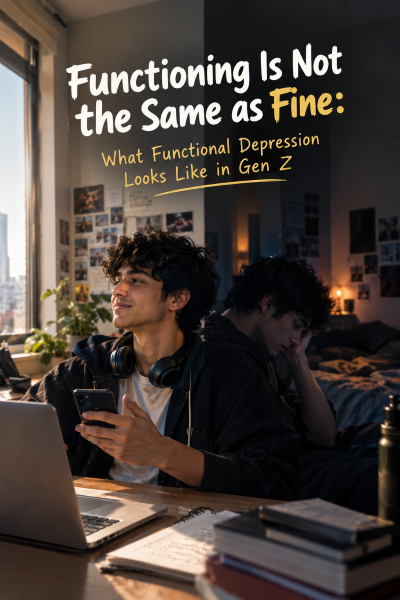
"Functional depression" is the name a lot of people use for this. To be clear, it is not an official diagnosis, it is more of an everyday phrase for depression that does not look the way we expect. We tend to imagine someone who cannot get out of bed, stops showing up and visibly falls apart. But plenty of people carry heavy, persistent low mood while still going to class, going to work and keeping up appearances. They are not faking being okay, they are just working incredibly hard to hold everything together, and that effort is exhausting in itself.
So what does it actually look like. Maybe everything feels like a chore, even things you used to love. Maybe you are tired in a way that sleep does not fix. Maybe you laugh at the right moments but feel nothing underneath, or you snap at small things and then feel guilty about it. Maybe your achievements stopped feeling like achievements, and you catch yourself thinking "so what" after something that should have made you happy. Some people get stuck in the loop of staying busy all the time because stopping means having to feel it.
Here is a question worth asking yourself. When someone says "how are you," do you answer "fine" on autopilot, even when it is not true. For a lot of us, "I'm good, just tired" has become a full time personality. And Gen Z has a few extra reasons for it. We grew up with constant comparison, pressure to have our life figured out early, an uncertain job market and a feed that makes everyone else look like they are winning. When everything is a performance, hiding how you feel starts to feel normal, even responsible.
The tricky part is that functioning can become the reason we do not get help. We tell ourselves it is not that bad. Other people have it worse. I am still passing my exams, still earning, still doing everything I am supposed to. But you do not have to hit rock bottom to deserve support. Struggling quietly is still struggling, and getting help early is usually easier than waiting until everything collapses.
If you recognise yourself in this, start small. Be honest with one person you trust, even if it is just "I have not been okay for a while." Notice how much of your day is spent pretending. Try to protect the basics like sleep, sunlight, movement and real meals, not as a magic fix but as a foundation. And consider talking to a doctor or therapist, who can actually tell you what is going on, because only a professional can say whether it is depression, burnout, anxiety or something else, and each one has different support that works.
If you are on the other side of this, a friend who always seems fine, check in properly. Ask twice. Say "that sounded like an automatic answer, how are you really." Sometimes that one question is the first time someone feels allowed to be honest.
Looking okay and being okay are not always the same thing, and you are allowed to want more than just getting through the day. If things ever feel hopeless, or you start feeling like you do not want to be here, please reach out right away to someone you trust or a professional. In India, Tele-MANAS offers free, confidential support on 14416.